The Independent Insight

Giving truth a voice

  • Email
  • Facebook
  • Flickr
  • Instagram
  • Phone
  • Twitter
  • Vimeo
  • YouTube
  • Berita
  • Politik
  • Ekonomi
  • Teknologi
  • Reviu
    • Reviu Buku
    • Reviu Filem
    • Reviu Muzik
  • Rencana
  • Podcast
  • Tentang Kami
  • Hubungi Kami

Songs of Themselves

February 3, 2017 By Editor The Independent Insight 50 Comments

The observation that “writing about music is like dancing about architecture” has been attributed to everyone from Martin Mull to Frank Zappa to Thelonious Monk. It’s famous enough that it’s almost hackneyed by now, yet it’s as good a description as any for the nearly impossible task of using words to describe the sacredly wordless. Get bogged down in technical terms like diatonic interval and chromatic diesis and you risk sounding gratingly wonkish. Indulge in platitudes like “lyrical melody” and “haunting chords” and you’re a pathetic lightweight, a philistine.

So you’ve got to hand it to musicians who put down their instruments long enough to write entire books. Classical musicians, especially, carry a set of burdens that can make cross-genre endeavors uniquely challenging. They are confined to practice rooms for hours, days and years on end and tyrannized by necessary perfectionism; their achievements in many ways rest on their ability to shut out the noise of the outside world and play the same set of notes again and again. And while that can yield fine results, it doesn’t always lend itself to the kind of divine hubris required to put your thoughts in print and expect anyone to care enough to read them.

In a memoir published last year and two forthcoming this month, an oboist, a concert pianist and a guitarist set out to map the intersections of their musical lives and the much thornier vagaries of life in general. For Marcia Butler, the oboe was a protective garment and a ticket to the world, though both applications came at a steep price. As an awkward, antisocial preadolescent in 1960s Long Island, Butler is coerced into “a binding and sickening pact” with her father; if she confers sexual arousal by sitting on his lap, he will drive her to oboe lessons. “My father was my epic Wagnerian Wotan,” Butler writes in THE SKIN ABOVE MY KNEE: A Memoir (Little, Brown, $27), referring to Richard Wagner’s ruthless patriarch. “I was his dutiful daughter Brünnhilde.”

Butler wins a scholarship to the Mannes College of Music, where she undergoes the perfunctory comeuppances of high-level music study, including an assignment to go back to the basics and practice nothing but long tones for three mind-numbing months. Long tones are notes held until you run out of breath, and anyone who’s ever seriously studied a wind instrument (I played the oboe with varying degrees of resolve from childhood through college) will experience traumatic flashbacks reading about Butler’s stages of grief around this situation. “The time spent crying could be used for playing the long tones,” she writes. “You do as you’re told.”

Outside the conservatory, it’s 1970s New York City, and Butler by default embarks on the hero’s journey particular to that time and place, stealing food and spare change from a roommate, riding the subway with fake tokens and sleeping with an assortment of grungy ne’er-do-wells, including one who winds up at Rikers Island for what Butler later learns was a rape at gunpoint. In one especially affecting scene, Butler plays a Harlem church gig and is discreetly acknowledged by a congregant who recognizes her from the bus to Rikers.

“That was the thing about being a girl who played the oboe and had a boyfriend in the clink,” Butler explains, in what is surely the only time such a sentence has ever been committed to paper. “It was easy for me to separate the two realities and carry on as if all were harmoniously blended.”

If the colluding forces of her father’s abuse, her relentless self-discipline, and her love of opera and similarly concupiscent classical works split Butler into two discordant and ultimately incompatible halves — dutiful nerd on one side, hot mess on the other — James Rhodes’s dysfunction broke him into the proverbial million little pieces. A late-blooming British virtuoso pianist who found celebrity in part by styling himself as a sort of rock ’n’ roll bad boy of the classical world — his albums have titles like “Razor Blades, Little Pills and Big Pianos” — Rhodes never landed in jail. But reading INSTRUMENTAL: A Memoir of Madness, Medication, and Music (Bloomsbury, $27), you get the sense he wishes he could claim such dramatic levels of bottoming out. If his first love is music, his second is his own destruction. As a child he endured sexual abuse by a teacher that was horrific enough to result in long-term physical disability as well as psychological damage that led to promiscuity, substance abuse, dissociative identity disorder, suicidal ideation and self-injury. At one point, he takes off his shirt and shows his wife that he’s carved the word “toxic” into his arm with a razor blade.

Rhodes would like us to know that he’s in good company. Musicians, even powdered-wig types like Bach and Mozart, are notorious for making train wrecks of their personal lives. As proof, Rhodes splices his own story with interstitial mini-bios of great composers, leaning heavily on the tortured nature of their genius and attendant psychosis. Schubert was “a walking, talking car crash,” Beethoven’s family was “riddled with alcoholism, domestic violence, abuse and cruelty,” and Schumann, a failed suicide, died “alone and afraid” in an asylum, but not before writing “Geister (Ghost) Variations,” a piece “so called because he said that ghosts had dictated the opening theme to him.”

Butler’s book also contains italicized interstitial sections, which she deploys to show the grueling process of learning a piece of music, making reeds or the cobbled-together life of a working musician. But while “The Skin Above My Knee” is overwritten in places (it would appear the author never met an adjective she couldn’t find a job for), it ultimately succeeds because it leaves readers knowing a thing or two about an esoteric world they probably never thought about before. “Instrumental,” for its part, hews desperately to the well-trod conventions of the well-trod genre known as Portrait of the Artist as a Young, Self-Hating Narcissist.

Quoting from “Instrumental” is tricky, since Rhodes drops an unprintable-in-a-family-newspaper epithet at least once a page. He is quite good at articulating the often intractable dimensions of shame as experienced by sexual abuse survivors. But he seems almost chemically dependent on the F-word and its innumerable iterations. His use is excessive even by the standards of the digital age, according to which “voicey” writers on the web reflexively opt for lazy vernacular as a way of branding themselves as insouciant badasses. The effect, however, is nearly always tedious and soporific, the verbal equivalent of a weary double-reed player blowing nothing but remedial long tones.

An antidote, at least of a sort, can be found in Andrew Schulman, whose earnest but affable memoir, WAKING THE SPIRIT: A Musician’s Journey Healing Body, Mind, and Soul (Picador, $25), uses the author’s own story as the first movement rather than the entire symphony. In 2009, Schulman was placed in a medically induced coma following a cascade of post-surgical complications and thought to be near death until his wife, Wendy, pressed an earbud to his head and played Bach’s “St. Matthew Passion.” Within hours, his vital signs stabilized, his life saved by “the passion of Wendy and Bach.”

Once recovered, Schulman pursues a second career as a volunteer “medical musician,” enrolling in the hospital’s music therapy program and eventually returning to the same intensive care ward where he was once a patient. If Schulman seems a little too dazzled by the notion of his own healing powers — several scenes show patients taking miraculous turns as he strums his guitar next to their beds — he redeems himself with his willingness to take on some real research and reporting. He talks with neuroscientists and psychiatrists and explores the legacy of Pythagoras, the ancient Greek mathematician and philosopher who was among the first to recognize the healing properties of music. Along the way, Schulman posits that the relationship between the pain we feel and the songs and compositions we love has its roots in a tender, transcendent form of symbiosis. “Artists who used their music to alleviate their own suffering composed some of the greatest music ever written,” Schulman writes, “which in turn has the effect of ameliorating the suffering of others.”

Not that there will ever be a cure for the suffering that music can sometimes inflict on the very musicians playing it. But, hey, it’s nice work if you can get it.

Editor The Independent Insight

Kami mengalu-alukan cadangan atau komen dari pembaca. Sekiranya anda punya artikel atau pandangan balas yang berbeza, kami juga mengalu-alukan tulisan anda bagi tujuan publikasi.


Filed Under: Reviu Buku

The Rise of Brooklyn, What’s Wrong and What’s Right

February 3, 2017 By Editor The Independent Insight Leave a Comment

THE NEW BROOKLYN
What It Takes to Bring a City Back

By Kay S. Hymowitz
199 pp. Rowman & Littlefield. $27.

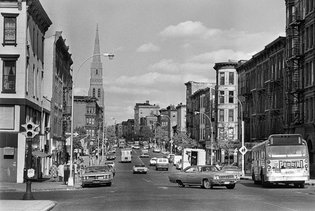
Words are always shifting in their meanings, but what has happened to the word “gentrification” is something of a special case. Not too long ago, it was pretty much a value-neutral term for the process by which communities exchange one set of residents for another. Now it is a term of opprobrium, a word that conjures up the cruel displacement of defenseless poor people by a greedy and arrogant professional elite.

There is a whiff of hypocrisy in all this, or at least a strong element of disingenuousness. Ask mayors what they wish for in their city centers, and they will give you similar answers — safe streets, bustling sidewalks, busy stores and restaurants, and a healthy and growing residential population with plenty of money in its pocket. Mayors and city planners spend much of their time maneuvering to create these things, but with one inevitable disclaimer: They don’t want it to lead to gentrification. What they choose not to admit is that the change they are seeking and the change they claim to fear are exactly the same thing.

As “gentrification” has become an increasingly dirty word, the volume of disingenuous posturing on the subject has increased dramatically, and the supply of balanced reporting has declined. One writer who has managed to speak sensibly above the din is Kay S. Hymowitz, a contributing editor at City Journal and a senior fellow at the Manhattan Institute. “The New Brooklyn” is her admirably clearheaded assessment of the borough that sometimes seems the epicenter of American gentrification.

Brooklyn’s overall return to affluence in the 21st century has been a remarkable event, and it is one that Hymowitz describes with an unmistakable relish. “A left-for-dead city marinated in more than a century of industrial soot,” she writes, “became just about the coolest place on earth and the paragon of the postindustrial creative city.” But the core of the book is the portrait that she draws of half a dozen individual neighborhoods, and the subtleties that each of them reveals about the gentrification process.

Writing of now fashionable Park Slope, where Hymowitz herself lives, she makes some provocative sociological points that tend to get lost in the larger commotion. One is that class is now far more important than race: White gentrifiers with elite-school credentials and well-paying jobs get on famously with their well-educated black counterparts. The people they fail to connect with are their white working-class neighbors, most of whom were there before gentrification and have never been comfortable with it.

In a similar way, work and avocation are more important than geography. The relationships that matter most in Park Slope are those that link residents who share professional and leisure-time interests, not those of people who happen to live next door to one another. The days when neighbors bonded during long summer evenings on the front stoop are a distant memory. Today’s Park Slope citizens are oriented toward their backyard gardens and cedar decks; they may not know the family next door at all.

Park Slope is a neighborhood of elegant but formerly dilapidated brownstones now restored to its 19th-century glory. Nearby Williamsburg is something else entirely: an old working-class enclave whose industrial grittiness became pretentiously chic in ways that no one thought possible. In Williamsburg, the artists who arrived as pioneers in the 1980s resent the techies who showed up in the early 2000s, and both resent the Wall Street traders who moved in after them. All three groups are scornful of the huge condo towers that have sprung up on the Williamsburg waterfront as a result of rezoning in the past decade and, as Hymowitz puts it, erected a “massive wall between the community and the waterfront park.” Those towers are a dark side of gentrification, and Hymowitz candidly portrays them as such.

The way for any collection of neighborhood profiles to succeed is to make fine distinctions between places that casual observers tend to consider similar. Hymowitz does that effectively in the case of Bedford-Stuyvesant and Brownsville, two neighborhoods widely perceived as outposts of African-American poverty and social dysfunction. Bedford-Stuyvesant hit bottom in the 1960s and 1970s, but more recently its architectural graces have made it attractive to middle-class newcomers, many of them black professionals. Brownsville, on the other hand, is an early-20th-century Jewish tenement slum that became an isolated fortress of public housing, a “dumping ground for the most welfare-dependent and least capable of Brooklyn’s black poor.” Gentrification has not touched it — at least not yet.

It is in discussing Brownsville that Hymowitz reveals her ultimate conclusions about the subject of her book. She challenges the local activists there who have voiced their opposition to the coming of the white middle class. “They’re making a mistake,” Hymowitz writes. “The difficult truth — and it is immensely difficult — is that gentrification would be about the best thing that could ever happen to Brownsville.”

And indeed, the thesis that emerges from the book, balanced as the author tries to make it, is that gentrification has been, on the whole, a good thing for Brooklyn. No fair-minded observer can deny, and Hymowitz does not try to deny, that significant numbers of poor people have been forced to leave Park Slope and Williamsburg, that this is happening in Bedford-Stuyvesant and that it will happen in more remote parts of the borough in the years to come.

And yet when one considers Brooklyn as much of it stood 40 years ago — once-vibrant communities whose residential blocks had become unsafe by day and by night; elegant brownstone homes that had fallen into dangerous disrepair; commercial districts with storefronts abandoned by merchants who could no longer make a living from them; job losses mounting in every corner of the borough — when one thinks back to those depressing days, and compares them with the Brooklyn of 2017, the ultimate logic of Hymowitz’s argument is compelling: Gentrification has winners and losers. Urban decline makes losers out of everyone.

Editor The Independent Insight

Kami mengalu-alukan cadangan atau komen dari pembaca. Sekiranya anda punya artikel atau pandangan balas yang berbeza, kami juga mengalu-alukan tulisan anda bagi tujuan publikasi.
Filed Under: Reviu Buku

Diving Into Hell: A Powerful Memoir of Depression

February 3, 2017 By Editor The Independent Insight 55 Comments

THIS CLOSE TO HAPPY
A
Reckoning With Depression
By Daphne Merkin
288 pp. Farrar, Straus & Giroux. $26.

Not so long ago, the mere fact of writing that you had suffered from depression conferred a badge of courage, but such confessions have devolved into a dull mark of solipsistic forthrightness. Famous people use such disclosures to persuade you that they are just like you, perhaps even more vulnerable; it’s a way of compensating for the discomfort attached to their glamour. Indeed, in an increasingly stratified world, people with any modicum of privilege may reveal their depression as an assertion of their common humanity. Clinical misery has taken over from death as the great equalizer. Vanity of vanities, all is depression.

Into this morass daringly comes Daphne Merkin with the long-awaited chronicle of her own consuming despair. Merkin was born into circumstances of plenty, the poor little rich girl; she is not interested in universalizing, though she often does so almost inadvertently. In the earlier part of her memoir, her tight focus on her own story at the expense of anyone else’s can come off as self-indulgent, even self-aggrandizing, but it is part of her considerable art that by the end, it feels like a winning frankness. The reader is saved from diaristic fatigue by the sharpness of her observations. She is not out to demystify life on Park Avenue, nor even to apologize for it, but only to explain her experience, which happens to have unfolded there. She does not try to unpack the function of the amygdala, avoids all the statistics about the rate of the illness and does not apologize for her descents into darkness. Instead, she narrates what happened and how it felt to her. And she does so with insight, grace and excruciating clarity, in exquisite and sometimes darkly humorous prose. The same tinge of self-aware narcissism that makes the book at times so annoying makes it finally triumphant. Merkin is unlikely to cheer you up, but if your misery loves company, you will find no better companion. This is not a how-to-get-better book, but we hardly need another one of those; it is a how-to-be-desolate book, which is an altogether more crucial manual.

Most memoirs aim to seduce; you are supposed to fall in love with the writer, or at the very least to approve of him or her. Merkin’s book makes no such demand; she is perfectly content to ensure that you admire her not at all. She blames herself so readily that you get to blame her, too. She takes a certain masochistic relish in trying to alienate with her singular blend of self-obsession and ostentatious vulnerability, and parts of the book appear to be intended as a punishment of everyone who hasn’t loved or understood her, from her mother on down to the reader. Yet this very “go ahead and hate me” dynamic achieves a real intimacy that more cautious accounts cannot equal; you end up liking her nearly in spite of herself. Mary McCarthy, asked to blurb Merkin’s first book, expressed astonishment at the book’s “lack of shame,” and wrote that “the book fascinates one by its openness.” It’s hard not to have the same take on this mordant volume with its waves of brittle honesty and blunt nakedness.

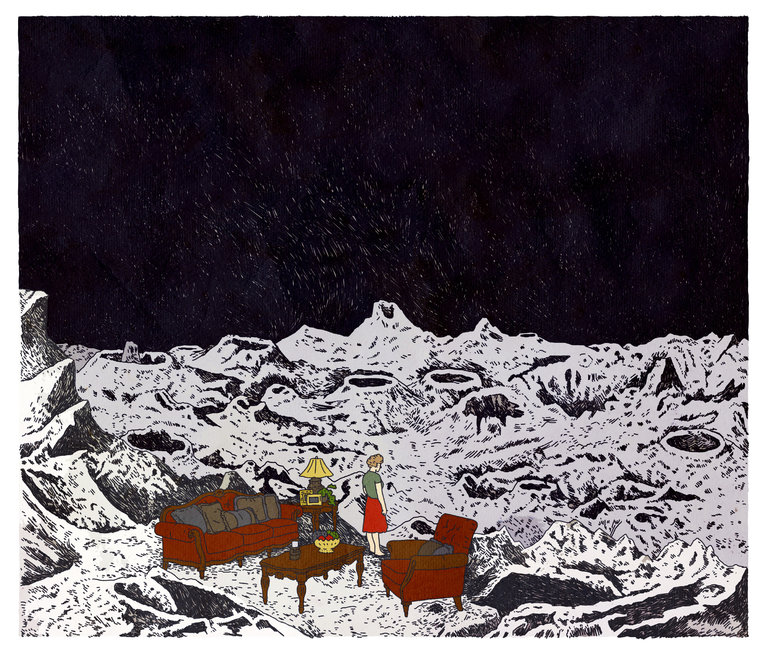
Merkin is capable of being at once melodramatic and finely nuanced; she has so many good phrases about depression that it’s hard to choose among them. In one episode, she is “shorn of relief,” which condenses the relentless descents into a perfect epigram. Depression is a social condition, and she gives it a social context, writing: “It was as though I fell off the end of the earth the minute I wasn’t in the presence of another person — or perhaps I meant that the other person fell off the end of the earth, or that we both did. However the process works, everyone seemed to dissolve, and I was left to wander around in a moonscape bleached of reliable human connection.” For those of us who have suffered the slings and arrows of this particular demon, there can be no clearer summary.

Merkin’s parents were prosperous Orthodox Jews who, in her telling at least, were cold and unloving, but who seem nonetheless to have provoked in her a passionate and consuming attachment. Her mother fulfills all the clichés about Jewish mothers except the one about unbridled self-sacrifice. She is domineering, intellectually inclined, critical, with a viselike grip, and so woven into the fabric of her children’s lives that they cannot have any experience that is not somehow of her. She appears empathetic enough to grasp what her children are feeling, but not very kind in the application of that knowledge. As a child, Merkin could achieve her mother’s full attention only when she was sick, and she ponders whether her yearning for maternal affection might have been an engine of her later breakdowns. When Merkin gets married, she feels she has betrayed the sacred monster she so loves to hate. “We were tangled up like bedclothes,” she complains, and yet she also writes, “Without my mother, who will cut up the world into bite-size pieces for me?”

You feel Merkin struggling to see her mother even as she professes to escape from her. “The fact is that she is not as unaware of my turmoil as she acts — or as I choose to believe,” she acknowledges. “There is nothing she doesn’t know, nothing that will undo her. Perhaps this resilience is what she offers instead of a more recognizable form of love.” This ruthless intimacy, no matter how poisoned, was inescapable; and when it faded, the shock was palpable. Of her mother’s final illness, Merkin observes, “She was alert enough but seemed far away, as though she had sailed out to sea while the rest of us stayed on dry land.” Those psychoanalytic narratives in which barely suppressed family drama and cruelty are intermingled with attachment and thus produce neurosis are often questioned in our post-Freudian epoch, but they hold true for Daphne Merkin, who has been much analyzed by psychiatrists and friends and family and self to emerge as an epitome of what analysis seeks to locate: a person in whom every emotion is also its opposite.

Her concern that her own depression is a pathetic failure, and perhaps even an imagined hysteria, salts a memoir full of actual hospitalizations and suicidal longings. She describes sitting at a dinner where she feels depression is “a fraudulent bundle of symptoms, an inflated case of malingering that everyone suffers from but that only a select, self-indulgent few choose to make a big deal about.” She is one of those who make a big deal about it, but she can hardly say how or why. In one telling passage, she writes: “Yesterday in therapy I described my life as ‘horrific,’ which I realize is subjective and self-dramatizing. . . . I know there are people hanging on by a thread in Haiti and the Congo and elsewhere across the globe, I know, I know, I know. . . . But I still can’t get out of being me, a desperado from way back.” Elsewhere, she confesses, “First there was the confinement of my childhood, like an incessantly replayed loop of film, and now there is my adulthood, which seems like a prison of a different kind.” Yet she knows how unattractive her condition is; she writes about sweating a lot, and about being boring, even to herself. “The truth is that no one is interested in why you want to kill yourself, no one really believes that you will, until you’ve already done it, and then it becomes morbidly intriguing to try and map it backward.”

Merkin is accustomed to the disengagement that her emotional state provokes; she dares us to disengage like so many others. Of her most recent hospitalization she says, “In my intake interview . . . I alternated between breaking down in tears and repeating that I wanted to go home, like a woeful child left behind at sleep-away camp. The admitting nurse was pleasant enough in a down-to-earth way but was hardly swept away by gusts of empathy for my bereft state.” She describes her envy of the anorexics on the unit, who “were clearly and poignantly victims of a culture that said you were too fat unless you were too thin. . . . No one could blame them for their condition or view it as a moral failure, which was what I suspected even the nurses of doing about us depressed patients. In the eyes of the world, they were suffering from a disease, and we were suffering from being intractably and disconsolately — and some might say self-indulgently — ourselves.” While Merkin nearly boasts of her nose-dives into hell, she also relates how hard she has worked to mask her depression, an enterprise that has made her feel only more alone. “I have hurled all the charm and wits I have at my disposal against my proclivity to depression, such that it would be difficult for even close friends of mine to detect how low I am at any given time.”

The power of such passages in “This Close to Happy” is that she refuses all defenses. She herself is never sure that she isn’t being self-indulgent, and her consternation about that fact invites deep sympathy with her underlying pain. She longs to be a better mother to her daughter, and worries constantly that her lapses into inchoate abnegation might be devastating to her child. She might not be an easy person, but she is determined to be better at affection than her parents were.

It is hard to be depressed, but it is also hard for those who have been depressed to forsake their condition. Merkin writes: “One minute you were in the shuttered-down universe of the verifiably unwell, of people who talked about their precarious inner states as if that were all that mattered, and the next you were admitted back into ordinary life, where people were free to roam as they pleased and seemed filled with a sense of larger purpose. It could cause vertigo if you weren’t careful.” Yet she does emerge, time and again, to feel the relief in being able to “entertain unhappy thoughts without getting stuck in a stranglehold of despair.”

She concludes by sharing that she feels better now, but we already knew that: If she didn’t feel closer to happy, she couldn’t have finished this book. She knows how foolish it is for a depressive to write about being better in a way that sounds permanent; she describes how entering a hospital after writing of depression in the past tense seemed a betrayal of a literary persona on which she had become reliant. She limns the fantasy of the depressed person, always believing against the odds that it is possible to be free of the condition’s endemic weight. “This secret conviction bears some resemblance to religious faith,” she observes, “although it demands nothing and offers nothing back except its own irrationality.” It is standard fare to say that books on depression are brave, but this one actually is. For all its highly personal focus, it is an important addition to the literature of mental illness.

Editor The Independent Insight

Kami mengalu-alukan cadangan atau komen dari pembaca. Sekiranya anda punya artikel atau pandangan balas yang berbeza, kami juga mengalu-alukan tulisan anda bagi tujuan publikasi.
Filed Under: Reviu Buku

Building a wall of ignorance

February 3, 2017 By Editor The Independent Insight Leave a Comment

JANUARY 31 — We’re just over a week into the Trump-Putin regime, and it’s already getting hard to keep track of the disasters. Remember the president’s temper tantrum over his embarrassingly small inauguration crowd? It already seems like ancient history.

But I want to hold on, just for a minute, to the story that dominated the news on Thursday, before it was, er, trumped by the uproar over the refugee ban. As you may recall — or maybe you don’t, with the crazy coming so thick and fast — the White House first seemed to say that it would impose a 20 per cent tariff on Mexico, but may have been talking about a tax plan, proposed by Republicans in the House, that would do no such thing; then said that it was just an idea; then dropped the subject, at least for now.

For sheer viciousness, loose talk about tariffs isn’t going to match slamming the door on refugees, on Holocaust Remembrance Day, no less. But the tariff tale nonetheless epitomises the pattern we’re already seeing in this shambolic administration — a pattern of dysfunction, ignorance, incompetence, and betrayal of trust.

The story seems, like so much that’s happened lately, to have started with President Donald Trump’s insecure ego: People were making fun of him because Mexico will not, as he promised during the campaign, pay for that useless wall along the border. So his spokesman, Sean Spicer, went out and declared that a border tax on Mexican products would, in fact, pay for the wall. So there!

As economists quickly pointed out, however, tariffs aren’t paid by the exporter. With some minor qualifications, basically they’re paid for by the buyers — that is, a tariff on Mexican goods would be a tax on US consumers. America, not Mexico, would therefore end up paying for the wall.

Oops. But that wasn’t the only problem. America is part of a system of agreements — a system we built — that sets rules for trade policy, and one of the key rules is that you can’t just unilaterally hike tariffs that were reduced in previous negotiations.

If America were to casually break that rule, the consequences would be severe. The risk wouldn’t so much be one of retaliation — although that, too — as of emulation: If we treat the rules with contempt, so will everyone else. The whole trading system would start to unravel, with hugely disruptive effects everywhere, very much including US manufacturing.

So is the White House actually planning to go down that route? By focusing on imports from Mexico, Spicer conveyed that impression; but he also said that he was talking about “comprehensive tax reform as a means to tax imports from countries that we have a trade deficit from.” That seemed to be a reference to a proposed overhaul of corporate taxes, which would include “adjustable border taxes.”

But here’s the thing: that overhaul wouldn’t at all have the effects he was suggesting. It wouldn’t target countries with which we run deficits, let alone Mexico; it would apply to all trade. And it wouldn’t really be a tax on imports.

To be fair, this is a widely misunderstood point. Many people who should know better believe that value-added taxes, which many countries impose, discourage imports and subsidise exports. Spicer echoed that misperception. In fact, however, value-added taxes are basically national sales taxes, which neither discourage nor encourage imports. (Yes, imports pay the tax, but so do domestic products.)

And the proposed change in corporate taxes, while differing from value-added taxation in some ways, would similarly be neutral in its effects on trade. What this means, in particular, is that it would do nothing whatsoever to make Mexico pay for the wall.

Some of this is a bit technical — see my blog for more details. But isn’t the US government supposed to get stuff right before floating what sounds like a declaration of trade war?

So let’s sum it up: The White House press secretary created a diplomatic crisis while trying to protect the president from ridicule over his foolish boasting. In the process he demonstrated that nobody in authority understands basic economics. Then he tried to walk the whole thing back.

All of this should be placed in the larger context of America’s quickly collapsing credibility.

Our government hasn’t always done the right thing. But it has kept its promises, to nations and individuals alike.

Now all of that is in question. Everyone, from small nations who thought they were protected against Russian aggression, to Mexican entrepreneurs who thought they had guaranteed access to our markets, to Iraqi interpreters who thought their service with the US meant an assurance of sanctuary, now has to wonder whether they’ll be treated like stiffed contractors at a Trump hotel.

That’s a very big loss. And it’s probably irreversible. — The New York Times

– See more at: http://www.themalaymailonline.com/opinion/new-york-times/article/building-a-wall-of-ignorance-paul-krugman#sthash.DjQtQPoX.dpuf

Editor The Independent Insight

Kami mengalu-alukan cadangan atau komen dari pembaca. Sekiranya anda punya artikel atau pandangan balas yang berbeza, kami juga mengalu-alukan tulisan anda bagi tujuan publikasi.
Filed Under: Rencana

Trump travel ban is an attack on religious liberty

February 3, 2017 By Editor The Independent Insight 98 Comments

JANUARY 31 — President Donald Trump’s executive order barring the US entry of refugees from seven majority-Muslim countries — while prioritising refugees who are religious minorities, namely Christians — is a shameful display of discrimination against people who are by legal definition innocent and in danger of their lives. It also violates the constitutional value of equal religious liberty.

Whether the constitutional violation could be used by a court to strike down the order is a more difficult question. Classically, the courts haven’t interpreted the Constitution to protect the rights of noncitizens living outside the US To get into court to challenge the order, its opponents will need to argue that it violates the rights of people physically in the US That will take some ingenuity, but it’s a hurdle that could be overcome. The trick will be to claim that visa holders from the seven countries who are lawfully in the US — for example, people on student visas — can sue because the order blocks them from leaving and returning as they would otherwise be able to do.

As for the Constitution, the 14th Amendment prohibits the government  from denying anyone the equal protection of the laws. It was designed to combat racial discrimination. But it also extends to unjust discrimination based on religion.

The First Amendment contains two separate guarantees, both of which the order also violates. The free exercise clause has been interpreted to bar the government from preventing a group’s religious practice out of religious animus.

And the establishment clause prohibits government action that endorses one religion over others. It also bars the government from disfavouring one religion over others.

The executive order invidiously treats Muslims differently from non-Muslims. That burdens Muslims’ expression of their religion, violating both the equal protection and free exercise clauses.

It does so in the first instance by singling out majority-Muslim countries for targeting — without a basis in national security as it claims. And it also singles out Muslims by prioritising Christians.

As written, the order doesn’t reach all majority-Muslim countries or all countries that produce terrorists. It conspicuously omits Saudi Arabia, from which 15 of the 19 September 11 attackers hailed.

It also doesn’t use the word “Muslim” or “Christian,” instead referring to religious minorities in the seven countries.

But the president himself has clarified to the Christian Broadcast Network and on Twitter that he intends the order to give preference to Christians. The government therefore can’t hide behind the order’s text, as seemingly neutral as it is.

Trump’s explanation also shows why the order endorses Christianity over Islam. It would be all right in theory to prioritize persecuted religious minorities for protection. But Trump’s explanations reflect a symbolic preference for Christian refugees.

This is analogous to declaring the US a Christian country. Indeed, the other countries that overtly prefer Christian to Muslim refugees — Poland, Bulgaria and Slovakia, for example — make no bones about saying they are Christian countries with a preference for their co-religionists.

Trump will certainly assert that Congress has full authority over immigration under the Constitution and that it has authorised the president to bar immigrants whose entry he considers to be “against the interests of the United States.” That’s the basis for his whole order.

But this authority can’t override the Constitution or the rights of people who are protected by it.

For these constitutional problems to get before a judge, there must a plaintiff who is within the reach of the US Constitution. And the plaintiff must have standing to sue because he or should would be harmed by the law.

A Muslim visa applicant from Iraq who has been denied access to the US while a Christian Iraqi has been allowed to enter can certainly say he’s been injured by the order. The problem is that because he is a non-US citizen outside the country, he doesn’t (according to the courts) fall under the protection of the Constitution.

The solution is to find someone already in the US who is injured by the order. Even noncitizens have religious liberty and equal protection rights when they are inside the borders.

The best bet would then be for the order’s opponents to bring suit on behalf of a plaintiff who is in the country lawfully but is hurt by the ban. The injury could be the lack of opportunity to leave the country and return. Provided the plaintiff has bought a plane ticket and really plans to travel home and back, not being able to return would count as an injury.

There’s a subtle twist. The order’s ban on immigration from the seven countries is separate from its prioritization of Christian refugees. The latter is supposed to happen only “upon the resumption” of refugee admissions, which the order currently bans for 120 days.

The plaintiff in the US could almost certainly challenge the first part. But the second part is harder to challenge, because the person in this country would be on a lawful visa, not someone being denied refugee status.

One possibility would be to have a plaintiff who was here in the US on a lawful visa who was then also denied refugee status. Another would be for a plaintiff to try to challenge the whole order even though only part of it affects him by saying the whole thing is cut from one anti-Muslim cloth.

Regardless, the legal goal for opponents will be to find a way to get a court to rule on the religious liberty dimensions of the order. It’s not an open-and-shut case by any means. But vindication of the American tradition of religious liberty is a high-stakes proposition — and courts should be prepared to consider the rights of any valid plaintiff to make that happen. — Bloomberg

– See more at: http://www.themalaymailonline.com/opinion/bloomberg/article/trump-travel-ban-is-an-attack-on-religious-liberty-noah-feldman#sthash.0XRihC1W.dpuf

Editor The Independent Insight

Kami mengalu-alukan cadangan atau komen dari pembaca. Sekiranya anda punya artikel atau pandangan balas yang berbeza, kami juga mengalu-alukan tulisan anda bagi tujuan publikasi.

Filed Under: Rencana

A chained city

February 3, 2017 By Editor The Independent Insight Leave a Comment

FEBRUARY 2 — It was quiet in Kuala Lumpur yesterday. Just like any other Federal Territories Day since there was a territory dedicated to the federal government. Residents are, as ever, clueless about this special zone’s designation and purpose, which is wholly consistent with the federation in general.

Yet, it is apt. That the wealthiest portion of the richest state was carved into a new artificial state in order to silence its people.

Federal Territory of the 1970s, before Labuan and Putrajaya were added belatedly to the exercise of political castration, was impassionate and colourless, and remains so today.

Little wonder the only person on my Facebook timeline who made any mention of Kuala Lumpur’s anniversary, was a son of a former MIC Kuala Lumpur youth chief!

Kuala Lumpur was born on the banks of the Gombak and Klang Rivers as the heart of an economically-vibrant Selangor, so the retelling of it as a federal territory in 1972 is about as attractive as watching the paint dry on the side of the riverbank past Central Market.

There was no clamour from the citizens to be a separate state. It was a novel stratagem to remove the city from voting the next Selangor government — as it almost did in the 1969 general election.

As a result, no more state seats for the 11 parliamentary seats. They stripped the city of an elected mayor seven years prior in 1965, and with the stroke of the sultan’s pen they rid it of power over the Selangor assembly.

What is left is observed through the giving of holiday to those working and studying in the city. There is no identity, no relevance, no shared memory, no nothing. Which is best highlighted by the negligible support for the city’s football team. What is Kuala Lumpur as a state to those designated since to live in it?

No clue.

Instead, the recognition of statehood is limited to distinctions with Selangor which envelopes it. It is about non-coinciding holidays, when some family members work or study and others are on leave. Or if shoppers cross Melawati to Hulu Kelang, supermarkets charge for plastic bags on some days, and in contra, the other state expects recyclables to be separated from general waste.

But hope finds a way to re-entangle the states.

Selangor and KL share the water.

Politics separate the people, but water, the lifeblood courtesy of the Selangor Water Board courses through both states, almost to remind those too tired to remember that the fates of both peoples are locked in a common destiny.

I lived in Selangor and everyone in the home went to work and study in the city, so it got surreal in the Ganesan household. Thaipusam was then not a holiday so it was the one day in the year I missed school — I hate to miss school.

It is sausage making

The political reality never shifted for city folks, which is why I suppose the people observed a strict culture of not caring about it.

Even as it stands, nine of the 11 states constituting Kuala Lumpur are under either DAP or PKR, but the mayor is a public servant appointed by the prime minister and he by convention cares very little about what the nine parliamentarians feel about the city.

It is not only the two Umno MPs that the mayor is interested in, it is the 11 Umno division chiefs in the city. The cruel reality of the system is that the votes of Umno members in Segambut matters more than what the overwhelming voters in Segambut supported in the last general election.

Which reduces the value of votes, worst, it reduces the interest of voters in their system.

I understand this is far too complex a situation than the average Umno division chief’s suited to digest, but it creates apathy and broad disillusionment among the people.

A city that has so many of its residents disinterested in its administration leads to a reduction of meaningful citizen-administrator engagement which is critical to the realisation of liveable cities.

We won’t be Melbourne or London by skipping the step of resident engagement. Selangor is envied because its suburban zones have undergone rigorous voter examination through the interplay of NGOs, local councillors and information sharing.

The cities and local councils have been shamed, exposes threatened and performances slammed, and the outcome has been not rebellion but better cities and towns. Urban dwellers need to feel like they are on their local authorities’ backs. That’s how they breathe.

In summary, while Selangor has no elections yet, the willingness to increase engagement has resulted in resuscitation not strait-jacketing. The opposite is true in Kuala Lumpur. City Hall is opaque, appointments are clandestine and operations at the mercy of the Federal Territories Minister.

This is not to say I don’t welcome local council elections in Selangor tomorrow.

Disengagement has had the opposite effect. Like resulting in the city inheriting an equestrian squad, fat men riding their horses about with no value to the people.

The way cities and towns are run tell us about larger things. If there is no democracy at our lowest levels, then all the veneer of democracy paraded at the highest echelons are just hollow and public exercises of window dressing.

A radio presenter said a few days ago that he was always going to vote by weighing all parties’ policies, and said about the joy of voting in the UK’s local elections by virtue of being a resident — many countries allow residents along with citizens to vote in their city elections.

I was perplexed. It was cognitive dissonance in its most evil twist.

He wanted us to always weigh the sides based on their policies? Policies are important, but so is the cornerstone of modern democracies which is that policies are the product of public discourses at all levels. It is the synthesising of our best and worst ideas, with the belief that if there is enough oxygen great things will be produced.

Local governments are the manifestation of the most organic form of generating policies/ideas from the commoners. When local governments themselves are opposed, as they are in Malaysia, let alone the progressive allocations of letting foreign residents vote, then those who are in admiration of policies should be opposed to those who oppose local elections.

And there is only one side that openly opposes local elections, they are incidentally the same side who believe in more participation of the people, the voters, in the system is bad for both policies and outcomes.

Returning to the theme of the city, this city whose spirit has been doused with prejudice for decades is crying for a reroute; the answer is about rejecting those opposed to granular origins within a democracy.

The city is the lifeblood, but for more than just Selangor. As the capital, it is the heart that pumps blood to Malaysia, freeing its spirit is not a political possibility, it is a survival necessity, if Malaysia is to fulfil its potential as a beacon of hope for those at home and beyond.

– See more at: http://www.themalaymailonline.com/opinion/praba-ganesan/article/a-chained-city#sthash.cM7fomAZ.dpuf

Editor The Independent Insight

Kami mengalu-alukan cadangan atau komen dari pembaca. Sekiranya anda punya artikel atau pandangan balas yang berbeza, kami juga mengalu-alukan tulisan anda bagi tujuan publikasi.

Filed Under: Rencana

Why do we care more about America than Malaysia?

February 3, 2017 By Editor The Independent Insight Leave a Comment

FEBRUARY 3 ― It’s surprising how some Malaysians seem to care more about Donald Trump’s ban on seven Muslim-majority countries and refugees, than on decades-long discrimination in our own country.

Of course, Trump’s 90-day ban on visitors from Iraq, Iran, Syria, Yemen, Sudan, Libya and Somalia ― which conveniently excludes Muslim-majority nations like the United Arab Emirates, Indonesia and Turkey where his family does business in ― and his 120-day suspension of the US refugee programme are discriminatory and reprehensible.

The Malaysian government, after all their rah-rah about the plight of the Rohingyas, is strangely silent about Trump’s immigration ban, while leaders from Germany, France and even Indonesia have criticised it. The least our government could do is issue a statement expressing concern.

On the other side of the political fence, Pakatan Harapan is organising a rally today at the US embassy to protest Trump’s so-called “Muslim ban.”

Liberal Malaysians have also been up in arms on social media about Trump’s ban and his firing of US acting attorney general Sally Yates for not defending his immigration order.

As deplorable as Trump’s ban is, why are we Malaysians paying so much attention to it, to the extent of organising a rally?

If we really cared about the safety of refugees, why don’t we pressure our government to sign the United Nations 1951 Refugee Convention and to open our shores up to them, instead of asking the US to open theirs up?

It’s because not many of us actually care about refugee rights, which is why political parties here are mostly silent on the issue. But we have the gall to ask another country to accept the refugees that we disdain.

If we’re upset about the discriminatory nature of Trump’s ban, why are we not equally upset about state discrimination in Malaysia? Of course, discrimination against Malays happens in the private sector too, which is why we need anti-discrimination laws to protect all citizens, whether they work in the private or public sector. But the government must first acknowledge the problem and refrain from perpetuating discrimination themselves.

Pro-Bumiputera policies, remnants of the New Economic Policy (NEP) that was supposed to have officially ended almost three decades ago in 1990, are still in place even though we’re supposed to be a developed nation by 2020.

The International Trade and Industry Ministry said last December that Bumiputera companies should be allocated at least a whopping 50 per cent of the value of large-scale contracts by the government and by government-linked companies (GLCs).

Half of the MRT project value was set aside for Bumiputera companies, with the prime minister saying that 50 per cent of the tenders in the first phase of the project was awarded to them due to their competitiveness even though the original target was 43 per cent. This begs the question of why quotas were necessary in the first place.

A minister who once told Malays to boycott Chinese businesses remains in government, while government leaders keep silent over racist insults hurled by the Red Shirts and do nothing to reassure the non-Malays that they are valid citizens of the country.

Incidents of religious discrimination, like the unilateral conversions of children to Islam and the confiscation of Christian bibles, continue to be an issue.

Tens of thousands of people held demonstrations in the US to protest against Trump’s ban. American citizens rallied because they cared about what was happening to their country.

But do we Malaysians care enough to do something about issues in our own country like racial and religious discrimination?

Politicians on both sides of the fence here are too cowardly to stand up on matters of race and religion if it affects their vote bank.

On PAS president Datuk Seri Abdul Hadi Awang’s private member’s Bill to amend the Shariah Courts (Criminal Jurisdiction) Act 1965 (Act 355), for example, only DAP from Pakatan and MCA/ MIC/ Gerakan from Barisan Nasional (BN) have spoken up against it.

Muslim-majority parties PKR and Amanah have remained ambivalent on the Bill that may further erode the rights of non-Muslims here, even though they saw it fit to issue strong statements against Trump’s ban that has nothing to do with Malaysian citizens.

When I invited a friend to join the February 18 BEBAS rally in Padang Merbok against Hadi’s Bill, he asked me: “This may be a stupid question, but does Shariah law affect non-Muslims?”

It wasn’t a stupid question because ordinarily, the simple answer should be “No.” Unfortunately, the religious authorities had investigated and confiscated items from Ninja Joe, a pork burger chain run by non-Muslims, during the “P. Ramly burger” fiasco. This disturbing episode clearly illustrates the encroaching powers of Islamic authorities on non-Muslim affairs and businesses. Yet, none of our politicians, not even those from predominantly Chinese parties, said anything.

One of the worrying things to non-Muslims about Hadi’s Bill is precisely this: that it will embolden religious authorities and those in power to intrude into our private lives and dictate how we should run our businesses, how we should dress and what we should (or shouldn’t) eat or drink.

Personally, I don’t care much about refugees. It would be great if Malaysia signed the UN Refugee Convention. But the issue doesn’t anger me to the point that I would organise a rally because, well, I care more about Malaysian citizens and making our country world class first before we share our luxuries with refugees.

An advertisement for “Malay buyer only” RM310,000 condominium units in Taman Tun Dr Ismail, for example, angers me more than Trump’s ban, since I don’t know any refugees nor anyone from Iraq, Iran, Syria, Yemen, Sudan, Libya or Somalia. I’ve never even been to America.

I slogged for years to buy a 15-year-old sub sale apartment unit in the outskirts of Subang Jaya for RM350,000, denying myself the pleasure of ridiculously priced coffee at hipster cafes.

Then I see discriminatory ads that prohibit me from buying a nice new condo in the place I grew up (and still live) in because of my skin colour.

Malaysians can fight for the rights of Muslims to enter America if they want to (although people might be better off in another country that’s isn’t on a path to self-destruction).

But I wish that we cared more about what’s happening in our own backyard.

The Holocaust might not have happened if the Germans themselves ― who did know about the deaths of Jews in concentration camps because these places were prominently reported in German media then, according to Professor Robert Gellately’s “Backing Hilter” ― had done something.

I’m not comparing the discrimination in Malaysia or in the US in any way to the Holocaust.

What I’m saying is that it’s imperative for Malaysians to speak out about issues affecting fellow citizens, instead of just jumping on the Trump-hating bandwagon because it’s convenient.

– See more at: http://www.themalaymailonline.com/opinion/boo-su-lyn/article/why-do-we-care-more-about-america-than-malaysia#sthash.WewkVP0z.dpuf

Editor The Independent Insight

Kami mengalu-alukan cadangan atau komen dari pembaca. Sekiranya anda punya artikel atau pandangan balas yang berbeza, kami juga mengalu-alukan tulisan anda bagi tujuan publikasi.

Filed Under: Rencana

Malaysians protest Trump’s immigration ban

February 3, 2017 By Editor The Independent Insight 143 Comments

KUALA LUMPUR, Feb 3 — Over 100 Malaysians demonstrated today against the temporary US immigration ban on citizens from seven Muslim-majority countries and refugees.

The protest, which lasted for over an hour in front of the US Embassy here, was led by Opposition coalition Pakatan Harapan along with Parti Pribumi Bersatu Malaysia (PPBM), joined by several other non-governmental organisations (NGOs).

Representatives from the organisers later submitted a memorandum directed towards US’ Ambassador-Designate to Malaysia, Kamala Shirin Lakhdir, demanding that US president Donald Trump rescind the executive order he signed on January 27 putting into effect the ban.

The memorandum on the ban, signed by Pakatan Harapan’s Amanah, PKR and DAP, along with PPBM, was handed over by Amanah president Mohamad Sabu and DAP’s Pasir Pinji assemblyman Howard Lee.

The memorandum, in which the demands were addressed directly to Trump, called on him to uphold the United Nations’ Universal Declaration of Human Rights.

Among those who attended include DAP’s Petaling Jaya Utara MP Tony Pua, social activist Datin Paduka Marina Mahathir, and PKR’s Selangor state executive councillor Nik Nazmi Nik Ahmad.

Angkatan Belia Islam Malaysia (ABIM) was among the NGOs that were also present and endorsed the memorandum.

Pakatan Harapan secretariat chief Datuk Saifuddin Abdullah, who first called for the protest, said that the immigration ban played straight into the narrative of the Islamic State (IS).

“It plays into their narrative that you should not trust democratically elected leaders. That you don’t trust superpowers,” he said.

“It gives more reason for people to be radicalised,” he added.

Trump’s order banned citizens from Iran, Iraq, Libya, Somalia, Sudan, Syria and Yemen for 90 days from entering the US.

It also suspended the US’ refugee system for 120 days and suspended the intake of Syrian refugees indefinitely.

Editor The Independent Insight

Kami mengalu-alukan cadangan atau komen dari pembaca. Sekiranya anda punya artikel atau pandangan balas yang berbeza, kami juga mengalu-alukan tulisan anda bagi tujuan publikasi.

Filed Under: Berita

Singapore to study Malaysia’s challenge to Pulau Batu Puteh judgment

February 3, 2017 By Editor The Independent Insight Leave a Comment

KUALA LUMPUR — Malaysia, citing “new facts” discovered in recently declassified British documents, has filed a challenge to the 2008 decision by the International Court of Justice (ICJ) that ruled Pedra Branca to be Singaporean territory.

Singapore’s Ministry of Foreign Affairs said in response that the Republic is “studying Malaysia’s application and documentation closely”, and has formed a legal team to respond to Malaysia’s challenge.

The Singapore legal team includes Attorney-General Lucien Wong, former Deputy Prime Minister S Jayakumar, Professor Tommy Koh, and former Chief Justice Chan Sek Keong.

Malaysian Attorney-General Mohamed Tan Sri Apandi Ali filed the application with the ICJ at The Hague yesterday over the sovereignty of Pedra Branca, which is located some 24 nautical miles to the east of Singapore.

“The application was made by Malaysia upon the discovery of some fact of such a nature as to be a decisive factor, which fact was, when the judgment was given, unknown to the Court and also to Malaysia as the party claiming revision,” Apandi said in a statement today.

He added: “We are also confident that the requirements as stipulated under Article 61 of the Statute of the International Court of Justice have been met in that, inter alia, the application for revision is brought within six months of the discovery of the new fact, and within 10 years of the date of the Judgment.”

The Malaysian statement did not disclose details of the “new facts”. In response to queries from TODAY, Apandi would only say that the “new facts” were “discovered after the British Government declassified the documents recently”.

But when asked to identify the specific documents, the Malaysian AG said: “Not now…when Singapore is being notified, they will be served with the relevant papers.”

The row over the ownership of Pedra Branca dates back to 1979, when Malaysia published a map indicating the island to be within the country’s territorial waters. Singapore lodged a formal protest with Malaysia in early 1980.

It took more than 20 years for the dispute to be brought before the ICJ in July 2003. In May 2008, after several rounds of written pleadings and public hearings, the court ruled Pedra Branca to be Singaporean territory.

The ICJ had found that Singapore investigated shipwrecks within Pedra Branca’s territorial waters and granted or did not grant permission to Malaysian officials to survey the waters surrounding the island. The ICJ noted too that Malaysia did not react to the flying of the Singapore ensign on the island and Singapore’s installation of military equipment on the island.

The ICJ had also judged that sovereignty over the Middle Rocks, a maritime feature to the south of Pedra Branca, belonged to Malaysia. But the court refrained from awarding South Ledge, also to the south of Pedra Branca, to either Malaysia or Singapore.

Asked how confident he was with this latest legal challenge, Apandi said: “I’m very confident, so is my team at The Hague.” — TODAY

Editor The Independent Insight

Kami mengalu-alukan cadangan atau komen dari pembaca. Sekiranya anda punya artikel atau pandangan balas yang berbeza, kami juga mengalu-alukan tulisan anda bagi tujuan publikasi.

Filed Under: Berita

Hundreds likely killed in Myanmar’s Rohingya crackdown, says UN

February 3, 2017 By Editor The Independent Insight Leave a Comment

Migrants believed to be Rohingya take their breakfast inside a shelter after being rescued from boats at Lhoksukon, in Indonesia’s Aceh Province May 12, 2015. Thailand and Malaysia may set up camps and detention centers to shelter hundreds of refugees arriving on their shores, officials said on Tuesday, as a leading inter-governmental agency said about 7,000 boatpeople were still adrift in the Bay of Bengal. REUTERS/Roni Bintang

GENEVA, Feb 3 — Myanmar’s military crackdown on Rohingya Muslims has likely killed hundreds of people, with children slaughtered and women raped in a campaign that may amount to ethnic cleansing, the UN said Friday.

A report from the United Nations Human Rights office, based on interviews with 204 Rohingya refugees in Bangladesh, also found it was “very likely” that crimes against humanity had been committed in Myanmar, echoing previous UN accusations.

The so-called “area clearance operations” launched by the military in northwest Rakhine state on October 10 “have likely resulted in several hundred deaths”, the report said.

Rohingya refugees recounted gruesome violations allegedly perpetrated by members of Myanmar’s security services or civilian fighters working in collaboration with the military and police.

“An eight-month-old baby was reportedly killed while his mother was gang-raped by five security officers,” the rights office said in a press release, citing witnesses.

Three children aged six or younger were “slaughtered with knives”, according to the report.

“What kind of hatred could make a man stab a baby crying out for his mother’s milk,” UN rights chief Zeid bin Ra’ad Zeid al-Hussein said in the statement.

“What kind of ‘clearance operation’ is this? What national security goals could possibly be served by this?,” he added.

A full 47 per cent of those interviewed by the UN said they had a family member who had been killed in the operation, while 43 per cent reported being raped.

Ethnic cleansing?

Rights office spokesman Ravina Shamdasani told reporters in Geneva that “the kind of systematic and widespread violations that we have documented could be described as ethnic cleansing”, but noted that was not a legally defined offence provable in court.

The report said the violence was the result of “purposeful policy” designed by one group to remove another group from an area “through violent and terror-inspiring means”.

The Rohingya Muslims are loathed by many among Myanmar’s Buddhist majority.

Myanmar refuses to recognise the Rohingya as one of the country’s ethnic minorities, instead describing them as Bengalis—or illegal immigrants from neighbouring Bangladesh—even though many have lived in Myanmar for generations.

Witnesses told the UN they had been taunted while they were beaten and mocked over the failure of “Allah” to help.

The military crackdown in Rakhine, home to more than one million Rohingya, was triggered by October 9 attacks on border guard posts, which Myanmar and the International Crisis Group say were carried out by foreign-backed militants.

Nearly 70,000 Rohingya have fled the ensuing crisis to Bangladesh.

The Myanmar government’s own probe into the unrest denied that the security forces had carried out a genocidal campaign against the Rohingya.

The government, led by Nobel laureate Aung San Suu Kyi, has said the allegations are invented and has resisted mounting international pressure to protect the minority.

But the UN’s Zeid, who has previously urged Myanmar to act, hit back again on Friday demanding that impunity for such serious crimes had to stop.

“The Government of Myanmar must immediately halt these grave human rights violations against its own people, instead of continuing to deny they have occurred,” he said.

Myanmar government spokesman Zaw Htay had no immediate comment as he had not seen the UN report.

Shamdasani however told reporters that the rights office had shared their findings with the government and was “engaged with them in Geneva as well as in Myanmar.” — AFP

Editor The Independent Insight

Kami mengalu-alukan cadangan atau komen dari pembaca. Sekiranya anda punya artikel atau pandangan balas yang berbeza, kami juga mengalu-alukan tulisan anda bagi tujuan publikasi.

Filed Under: Berita

  • « Previous Page
  • 1
  • …
  • 6
  • 7
  • 8
  • 9
  • Next Page »

Recent Posts

  • Koroy Akhirnya Mengaku Terima Wang Hasil Mengemis
  • Rief Dedahkan Abang Koroy Terima Wang Hasil Mengemis
  • Masyarakat Malaysia Menjadi Semakin Rasis Ekstremis Akibat Kempen Kebencian Terhadap Rohingya Terus Ditiup
  • Strategi Perang Iran Dan Keberkesanan Serangan Peluru Berpandunya Ke Atas Pengkalan Tentera Amerika Syarikat Di Negara-Negara Teluk
  • Caste: The Origin of Our Discontents

Archives

Copyright © 2026 The Independent Insight