The Independent Insight

Giving truth a voice

  • Email
  • Facebook
  • Flickr
  • Instagram
  • Phone
  • Twitter
  • Vimeo
  • YouTube
  • Berita
  • Politik
  • Ekonomi
  • Teknologi
  • Reviu
    • Reviu Buku
    • Reviu Filem
    • Reviu Muzik
  • Rencana
  • Podcast
  • Tentang Kami
  • Hubungi Kami

Akmal Sabri: Berfikir Tentang Pemikiran – Reviu Buku

January 5, 2020 By Editor The Independent Insight

Oleh: Ahmad Akmal bin Sabri

Saya membaca buku “Berfikir tentang Pemikiran” sebanyak dua kali. Membaca kali kedua supaya dapat menulis ulasan buku ini dengan lebih baik. Pada pendapat saya, buku ini sangat sesuai dengan pemuda yang masih atau pernah terlibat dengan gerakan Islam, usrah dan ada semangat islah yakni membaiki masyarakat. Kalau tidak pernah terlibat, pembaca mungkin akan sedikit terkejut.

Buku ini juga sesuai untuk sesiapa sahaja yang berminat dengan isu politik negara dan luar negara dan bukan seorang yang penyokong “fanatik’’. Penulis neutral dalam isu politik dan mengkritik semua parti.

Saya rasa tema buku ini juga tema berfikir dan pandangan dari sudut pandang yang jauh. Penulis membawakan kisah Carl Sagan yang melihat gambar bumi dari jarak 6 billion kilometer yang diambil dari kamera Voyager-1 iaitu gambar bumi yang kelihatan sangat kecil. Pada pendapat saya, itu satu kisah pedoman yang baik untuk seorang pemikir. Kadang-kadang manusia perlu melihat dari skop yang lebih jauh, luas untuk apa-apa persoalan atau masalah. Lihatlah dunia luar, jangan melihat dalam kelompok sendiri sahaja. Di dalam buku ini penulis banyak memberi rujukan dan contoh-contoh dari pandangan luar dan besar dan saya akan petik beberapa dalam ulasan ini.

Ada pepatah Arab lebih kurang begini maksudnya tangan atau kuku sendiri lebih tahu di mana bahagian yang gatal untuk digaru. Hazrul Hazwan pernah cakap pepatah ini dalam program usrah di Moscow, saya cari di google tidak jumpa pula. Tapi pernah ternampak di dalam buku Hamka. Maksudnya manusia lain-lain rasanya dan lain juga apa yang membuatkan manusia tersentuh. Ulasan saya ini ulasan yang general dan sedikit pendapat peribadi untuk dikongsi dan akan menyentuh beberapa topik yang diutarakan oleh penulis yang bagi saya menarik untuk diamati.
Dalam buku ini saya ingin menyentuh beberapa topik yang ditulis oleh penulis.

Dakwah

Isu dakwah, tarbiyah dan pengerakan, penulis memberi mesej dan nasihat untuk pendakwah dan gerakan dakwah. Dakwah perlukan kefahaman, tidak cukup dengan semangat sahaja. Penulis menukilkan kisah dari seorang penulis bernama Naíma Robert dalam bukunya “From my sister’s lips”. Nai’ma menceritakan bahawa kebanyakan wanita barat memilih Islam adalah kerana kefahaman mereka setelah mengkaji, bertanya dan membaca mengenai Islam. Dakwah juga perlukan pengorbanan dan keikhlasan. Penulis memberi contoh kenalan-kenalan beliau yang beliau segani dan salah satu sebab beliau terus konsisten dalam jalan dakwah adalah kerana contoh-contoh yang baik dari murabbi-murabbi beliau.

Sebenarnya dengan berkorban membuatkan hati anak didikan kita lebih terpaut dan itulah juga cara Nabi. Ada pautan hati dalam berdakwah. Saya pernah membaca satu kisah sahabat nabi yang memberitahu, mereka rasa macam merekalah yang paling disayangi nabi dek kerana layan Baginda terhadap mereka. Isu ikhlas pula saya setuju dengan pandangan penulis bahawa tidak salah mengwar-warkan kebaikan kita supaya dapat dicontohi oleh masyarakat. Sekarang ini kisah-kisah tidak bermanfaat dan trend semasa seperti menari tepi kereta lebih dipublisitikan berbanding perkara yang baik. Dakwah juga perlukan konsitensi. Pembaca mesti terkejut kerana penulis membaca contoh ulasan Noam Chomsky tentang gerakan parti komunis. Gerakan tersebut kuat pada waktu itu kerana continuity dan kosistensi manusia-manusia yang terlibat.

Di dalam isu dakwah, saya sangat suka dengan hujung Bab 5 “Sisi-sisi yang tidak dapat ditinggalkan’’ dalam bahagian “siapa yang perlu berdakwah”. Bagi saya, semua umat Islam yang rasa selesa dalam kelompok sendiri harus membacanya. Penulis menceritakan pengalaman beliau di Saint Petersburg bergaul dengan orang-orang Uzbekistan. Untuk pengetahuan semua, Imam Bukhari yang terkenal dengan kitab Sohih Bukhari berasal dari sana. Bukhara adalah merupakan bandar di dalam Uzbekistan. Tetapi sedihnya kebanyakan orang Uzbekistan yang penulis bergaul sangat kurang kefahaman dan praktis mereka dalam Islam. Mereka tidak berpuasa dengan konsisten dan malah ada juga yang meminum arak. Pada pendapat penulis, mereka hanyalah mangsa sistem sekularisma yang mencengkam wilayah mereka yang diwarisi dari Kesatuan Soviet yang komunis dan ateis. Sekiranya mereka lahir di negara yang mengamalkan Islam, dalam keluarga yang mengamalkan Islam, dan dibesarkan dengan didikan Islam mungkin mereka tidak sebegitu. Pada pendapat saya, kita sepatutnya bersyukur dengan nikmat kefahaman tentang Islam. Kadang-kadang kita ini baik bukan sebab diri kita sendiri. Kita hanya beruntung, bernasib baik sahaja. Saya dahulu macam rasa marah dengan kenalan-kenalan yang tidak solat tetapi saya rasa mungkin isu itu berakar dari didikan zaman kecil lagi. Dari marah saya menjadi kasihan.

Di sebalik kisah sedih tadi, penulis berkongsi juga kisah yang baik tentang orang Uzbekistan, bernama Hamidullah. Beliau merantau mencari kerja, sementara itu beliau membuka kelas pengajian al-Quran percuma di masjid. Begitulah semangat Islam yang ada dalam diri beliau. Penulis juga disapa oleh orang tua di sana yang masih belajar iqra, mengenal huruf arab dan mengatakan kita sangat beruntung. Bagi saya kisah ini sepatutnya memberi semangat dan keinsafan tentang diri sendiri. Adanya insan-insan ikhlas seperti Hamidullah, Islam akan bersinar semula dan sama ada kita terlibat atau tidak, janji Allah pasti datang.

Untuk pengetahuan penulis, saya berkongsi kisah ini dengan seorang pemuda yang terlibat dengan tabligh. Saya jumpa pemuda itu di surau ketika saya berehat, menunggu isteri saya di klinik kesihatan. Ketika itu saya memang tengah membaca buku tuan penulis, dan saya gembira dapat berkongsi kisah orang Uzbekistan ini dengan pemuda tersebut.

Politik

Bagi saya bab 10 “Kritik terhadap politik tempatan dan antarabangsa” adalah bab paling panjang dalam buku ini. Saya paham apa yang penulis cuba sampaikan. Apakah itu demokrasi? Demokrasi ini sistem Islamkah? Jika Islam benarkan, acuan yang bagaimana yang boleh? Bagi saya , semua manusia perlu faham politik ini bukanlah isu 0 atau 1 semata-semata.

Kebanyakannya dalam ‘’grey area’’. Kalau seseorang terlalu jumud dalam isu politik, bagi saya dia tidak membaca. Isu politik juga sangat penting untuk kita terbuka. Di zaman sahabat, gerakan Syiah ini adalah lebih kepada gerakan politik, kini ia berubah kepada gerakan agama yang bagi saya sudah menyeleweng kefahaman mereka tentang Islam.

Dalam topik ini saya suka isu American Exceptionalism. Saya rasa ini skop besar seperti melihat bumi dari jauh jugak untuk kita memahami isu politik dan demokrasi dengan lebih luas. Bagi saya, isu exceptionalism dan rasa exclusive  ini pun terlibat dalam gologan kecil juga, seperti rasa kelompok sendiri lebih baik (keluarga, politik, bangsa) dari kelompok lain.

Antara topik dari sudut pandang yang jauh yang dibawa penulis adalah tentang autobiografi Nelson Mandela, “Long Walk to Freedom” dalam isu menangkap imiginasi rakyat biasa. Bagi saya semua rakyat perlu tahu tentang kisah ini supaya kita boleh bertanya pada diri sendiri. Betul ke ahli politik ini ambil kisah tentang kita seperti Nelson Mandela?

Isu kesatuan juga dibincangkan. Berpecah memang melemahkan sesuatu organisasi, tetapi memang menjadi lumrah manusia akan berbeza pendapat. Dalam bab kritikan tentang perpecahan pegerakan Islam dan parti politik, penulis ada memberi contoh bagaimana negara Eropah Bersatu membentuk European Union, dan berjaya membawa wilayah mereka menjadi satu kuasa kuat yang mampu menyaingi hegemoni Amerika walaupun sebenarnya mereka berbeza.

Topik politik ala Machiavellianisme juga suatu yang baru untuk saya. Quote “it is much safer to be feared that loved’’ itu sangat tepat. Penulis menerangkan hasil kajian Machiavelli tentang sejarah-sejarah politik dahulu, bagaimana kuasa pemerintahan boleh jatuh dan bagaimana ia boleh berkuasa dengan stabil. Point penting dari hasil kajian beliau adalah moral dan politik adalah sesuatu yang tiada kaitan.

Perjuangan

Semua manusia adalah pejuang, pentingkan hal diri sendiri juga adalah perjuangan. Tetapi kita perlu lebih dari itu. Penulis membawa kisah dari buku seorang penulis, Profesor Norman G. Finkelstein bertajuk “The Holocaust Industry” . Finkelstein mengkritik Israel dalam buku dan hasil kajiannya tentang Holocaust walaupun beliau adalah seorang Yahudi. Beliau aktivis yang aktif berjuang untuk hak rakyat Palestin. Begitulah contoh yang patut kita ambil. Seorang yang setelah mengetahui kebenaran, memeluk erat dengan pegangan itu. Fikelstein walaupun seorang Yahudi, beliau melawan bangsanya sendiri, memilih berjuang menjangkaui perjuangan peribadi. Ini pengajaran yang penting dalam tema perjuangan.

Berfikir, Berdebat, dan Memberi Pendapat

Isu berdebat ini quote ini sangat penting bagi saya.

“The most difficult subjects can be explained to the most slow-witted man if he has not formed any idea of them already; but the simplest thing cannot be made clear to the most intelligent man if he is firmly persuaded that he knows already, without a shadow of doubt, what is laid before him ‘’ – Leo Tolstoy .

Dalam beberapa hari lepas, saya berbeza pendapat, berdebat di Facebook dan terus saya teringat quote ini.

Pada pendapat saya kebanyakan manusia sudah ada pegangan masing-masing ketika berdebat. Susah untuk kita bersemuka, berdebat untuk menjadi pendengar dahulu, memahami buah fikiran lawan kita dan kemudian berubah. Saya pernah berborak dengan penulis sewaktu di dalam pengajian di Selatan Malaysia. Penulis berkongsi cerita tentang debat Sunnah-Syiah di Perak. Penulis ada nukil kisah ini di buku beliau. Di akhir debat tersebut, pendebat Syiah berkata beliau pun tidak mahu sesat, semua orang mencari kebenaran. Penulis dan saya setuju dengan kenyataan itu. Semua orang hendak berada di pihak benar dan siapa ingin di pihak yang salah (kecuali ada kepentingan dan isu ego seperti Arab Quraish).

Kadang- kadang kita perlu tahu sebab apa kebenaran bagi orang yang lain dari kita berbeza pula. Iya hidayah milik Tuhan. Penulis juga pernah memberitahu saya yang beliau membaca buku tentang atheist, di dalam buku ini beliau nyatakan juga tentang bacaan beliau dan mendengar perbincangan orang ateis seperti Richard Dawkins. Bagi saya itu tidak salah dan mencari kebenaran memerlukan kita berfikir, menganalisa. Mungkin tersalah dalam apa-apa pendapat itu lumrah.

Penulis membawa skop pandang jauh tentang isu mencari kebeneranan dan berani untuk berfikir dengan berkongsi kisah Aristotle. Aristotle membuat kesimpulan bumi berbentuk bulat , bukan mendatar dan bumi merupakan pusat alam. Matahari, bulan mengelilingi bumi. Di zaman itu semua orang menganggap bumi ini mendatar. Kemudian, setelah manusia semakin maju dalam bidang sains dan astronomi, ternyata pandangan bumi adalah bulat betul tetapi bumi adalah pusat alam adalah salah. Namun, Aristotle masih dikenang sebagai seorang pemikir yang hebat walaupun model bumi beliau tidak tepat sepenuhnya. Beliau adalah seorang pemikir yang berani.

Teringat saya tentang tulisan komen di facebook. Di dalam isu Syiah, seorang ustaz membawakan hasil kajian beliau dengan dalil-dalil dari sejarah dan juga bukti tentang salah faham Syiah, tentang agama, dan kenyataan-kenyataan dari pihak Syiah. Kemudian seorang memberi komen yang berbunyi begini:

“Takkanlah Tok Guru tak tahu tentang ini. Aku tak percaya kau. Aku lebih percaya Tok Guru aku”.

Begitu dangkalnya manusia sebegini. Tidak mengunakan anugerah akal dari Tuhan untuk berfikir, hanya mengikut sahaja. Saya sangat marah ketika membaca komen tersebut. Saya yakin saranan membaca dalam Islam juga bermaksud membaca, menganalisa dan berfikir. Itulah saranan yang pertama dalam Islam dan sangat cocok untuk zaman ini. Owh isu fictional reality juga menarik.

Ekonomi

Penulis memberi penerangan tentang Kapitalisme dan Komunisme. Ada istilah-istilah baru yang saya dapat belajar seperti kaum proletariat, borjuis dan nama-nama seperti Adam Smith dan Karl Marx. Walaupun pemikiran komunis, sosialis agak radikal kerana isu tidak percaya kepada kewujudan tuhan, tetapi idea komunis ada menyumbang juga dalam sistem sekarang. Sistem bekerja 8 jam sehari merupakah hasil perjuangan idea tersebut. Saya baru tahu tentang itu setelah diterangkan oleh penulis di dalam buku ini.

Antara topik yang menarik bagi saya adalah kajian dari buku bertajuk “Why Nation Fail”. Ia adalah kajian berkenaan faktor sesebuah negara maju dari segi ekonomi. Adakah faktor geografi, hasil bumi, atau faktor lain? Kesimpulan buku tersebut, faktor terbesar adalah dari polisi negara dan institusi politik negara tersebut. Polisi yang elok membuat rakyat kreatif. Saya ada kawan yang cemerlang dan ada idea yang bernas dalam bisnes. Sekarang beliau berjaya juga (bukan niaga kedai makan atau jual produk kecantikan).

Penambahbaikan

Saya tahu sebahagian dari kandungan buku adalah dari blog penulis. Ada sebahagian topik penulis mengunakan ganti nama diri aku, kebanyakan gunakan perkataan saya. Mungkin perlu selari?

Kemudian, saya rasa kalau disusun kembali sebahagian tajuk dalam tajuk besar lagi baik. Seperti tajuk dakwah dan kemudian subtopik pandangan penulis, tajuk politik, dan ada subtopic pendapat penulis. Tetapi saya faham konsep buku ini, seperti travelog. Buku Ustaz Hasrizal berbentuk begini juga. Ada satu perengan yang saya rasa kurang jelas. Muka surat 263, perengan ke-3.

Kesimpulan

Terakhir, saya berharap 10 atau 20 tahun akan datang penulis dapat mengkritik padangan penulis sendiri yang penulis rasa mungkin isu sekian-sekian sudah berubah atau tersalah. Haha review buku seperti sinopsis pula. – AAS.

Tulisan ini merupakan ulasan bagi buku “Berfikir Tentang Pemikiran” oleh Syed Ahmad Fathi, terbitan The Independent Insight pada tahun 2018. Ulasan oleh saudara Ahmad Akmal bin Sabri ini pertama kali disiarkan di laman Goodreads.com pada 16 Disember 2019.

Editor The Independent Insight

Kami mengalu-alukan cadangan atau komen dari pembaca. Sekiranya anda punya artikel atau pandangan balas yang berbeza, kami juga mengalu-alukan tulisan anda bagi tujuan publikasi.

Filed Under: Reviu Buku

Bantah1050 – Kaji semula gaji minima

October 12, 2018 By Editor The Independent Insight 1 Comment

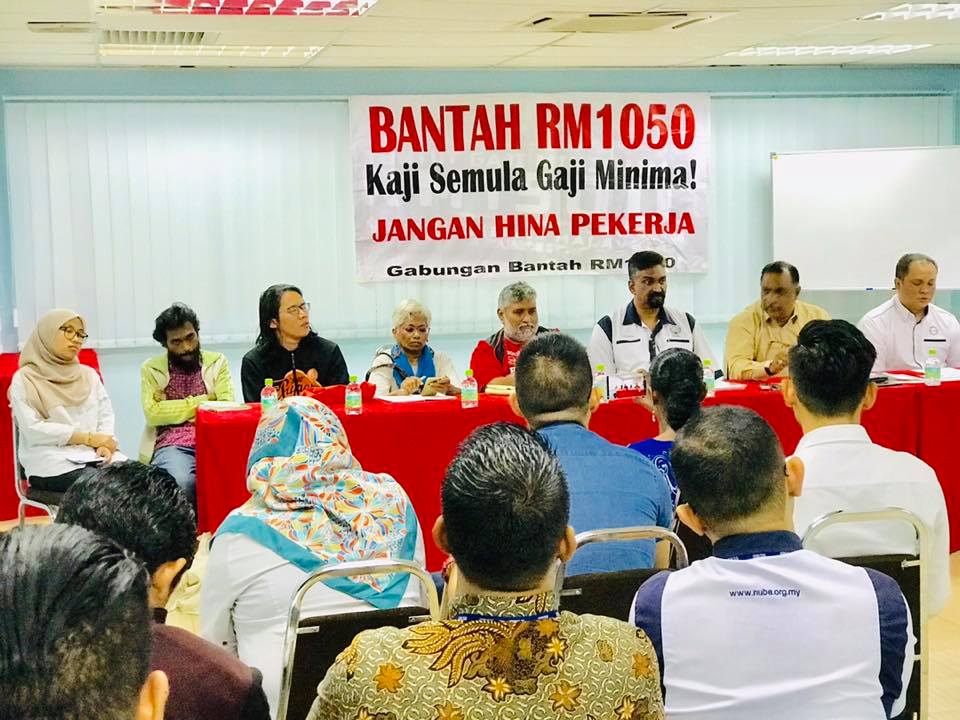
SIDANG MEDIA MENGUMUMKAN PENYAMPAIAN MEMORANDUM KEPADA YAB PERDANA MENTERI MALAYSIA 17 OKTOBER 2018 • DI PARLIMEN

KAJI SEMULA AMAUN GAJI MINIMA. KAMI BANTAH KENAIKAN CUMA RM50!

Pagi ini (Jumaat) 12 Oktober 2018 sidang media penting telah di adakan oleh MTUC bersama wakil kepimpinan Gabungan Bantah 1050 untuk mengumumkan maklumat penyampaian Memorandum seperti di atas.

Anda sedia maklum bahawa YAB Perdana Menteri telah mengumumkan Gaji Minima baru seragam RM1050 di Semenanjung dan Sabah dan Sarawak.

Bagi Semenanjung, kenaikan Gaji Minima hanya RM50. Amaun ini adalah satu penghinaan kepada kaum pekerja di Malaysia yang telah menyumbang produktiviti mereka untuk menjamin keuntungan para majikan dan pembangunan negara.

Lebih 30 organisasi terdiri dari Kesatuan Sekerja, Organisasi dan parti politik akan hadir untuk menyerahkan memorandum dan menuntut kajian semula kenaikan RM 50 kepada jumlah yang lebih tinggi – RM 1,800.

Editor The Independent Insight

Kami mengalu-alukan cadangan atau komen dari pembaca. Sekiranya anda punya artikel atau pandangan balas yang berbeza, kami juga mengalu-alukan tulisan anda bagi tujuan publikasi.
Filed Under: Ekonomi

Masalah kalau bagi budak jadi menteri

September 28, 2018 By Editor The Independent Insight 1 Comment

Oleh: Abdul Rahim Hilmi Zakariya

Lim Teong Kim merupakan Pengarah NFDP (Program Pembangunan Bola Sepak Kebangsaan). Dia bukan pengurus skuad B-16 negara sahaja. NFDP ini melatih akar umbi bermula dari skuad B-12 sehingga skuad B-17.

Jika hendak mengukur kejayaan LTK ini, kita perlu lihat kemajuan semua pasukan yang berada di bawah program NFDP.

Contohnya skuad B-13 yang menjadi juara Iber Costa di Portugal 3 tahun lepas. Mengalahkan skuad muda Sporting Lisbon 2-1. Sporting Lisbon ini kelab yang mengasah bakat Cristiano Ronaldo dan Luis Figo. Dan kita menang.

Terkini Jun tahun ini, skuad B-14 menang trofi Vogido di Belanda. Kejohanan ini bukan calang calang penyertaannya. Skuad B-14 China, FC Basel dan Bayer Leverkusen antara yang turut sama mencabar. Tetapi kita menang. Malahan pemain Malaysia Nabil Zainuddin dipilih pemain terbaik kejohanan dan Zulhilmi Sharani pula menerima anugerah penjaga gol terbaik.

Sebulan sebelum itu, skuad ini juga menang Whitsun U-14 Challenge di Dortmund, Jerman. Menjadi juara kumpulan dan menumbangkan kelab Denmark FC Midtjylland 4-0 pada perlawanan akhir. Pasukan senior kelab ini adalah Juara Liga Super Denmark musim lepas. Kelab ini juga adalah kelab pertama di Denmark yang mempunyai akademi bola sepak dan paling banyak melahirkan bakat muda untuk negara tersebut. Kelab ini dah ada 14 tahun program akademi muda yang tersusun, boleh kena buli dengan skuad negara yang baru 4 tahun buat program NFDP.

Sebab itu saya berani sebut menteri sukan kita ini terlalu mentah apabila menilai prestasi LTK hanya untuk satu skuad sahaja. Dan kebodohan paling utama adalah apabila beliau mempertikaikan gaji LTK sebanyak Rm175,000 sebulan. Seolah-olah beliau tidak tahu harga pasaran.

Gaji LTK itu hanyalah kira kira €8000 seminggu. Dan mengambil kira reputasinya selaku jurulatih skuad muda Bayern Munich dan pernah melahirkan pemain bernilai tinggi seperti Thomas Mueller, gaji itu sebenarnya munasabah.

Terutama apabila kita membandingkannya dengan gaji Jupp Heynckes, pengurus Bayern Munich pada 2013 (tahun akhir perkhidmatan LTK di Bayern) adalah kira kira € 100,000 seminggu.

Sepatutnya benda-benda ini cuma perlu buat post mortem dan cadangan penambahbaikan. Bukannya diumum seolah olah macam hendak mengatakan LTK ini makan duit rakyat tanpa buat kerja.

Kan kita persoal gaji dia sebagai MP, menteri dan elaun-elaun lain yang berpuluh ribu tapi tiada hasil signifikan tu macam mana pula?

Dan kalau betul-betul hendak di tutup NFDP kerana nak jimat duit, yang pergi isytihar nak buat pasukan MotoGP tu pakai belanja air liur kah?

Ini lah masalah kalau bagi budak jadi menteri.

Artikel ini merupakan pandangan penulis dan tidak semestinya mewakili pendirian The Independent Insight.

Editor The Independent Insight

Kami mengalu-alukan cadangan atau komen dari pembaca. Sekiranya anda punya artikel atau pandangan balas yang berbeza, kami juga mengalu-alukan tulisan anda bagi tujuan publikasi.

Filed Under: Politik

How Starbucks Saved My Life

March 20, 2017 By Editor The Independent Insight Leave a Comment

I discovered this book in the pantry of my office. The title was very appealing, although its sounds like an ads campaign for Starbucks. Most of the goodreads review is very negative on this book, some said that it just a boring piece which talked about different type of coffee. But after reading through the pages, I found that it was not that bad. In fact, for me personally, it was a genuinely amazing story.

The story start when Mike was ousted from his high paying job at a corporate advertising company. Mike who came from a privileged white upper-middle class family now jobless. He then have an affair with other women and divorced with his wife. To add more complication, he was then diagnosed with a small tumor behind his brain which caused a hearing problem to his left ear. So in his late sixties, he was broke, jobless, divorced and living with health problem. It was then, he met Crystal, a young African American manager who offer him a job at Starbucks.

In his new job he learn many values, and made many friends from different social classes. He learn that at Starbucks, respect is an uphold principle, not just a written word. He used to be a boss now realized that in his new job, no one order him to do anything. Instead all partner ( how Starbucks address colleagues), will ask politely “can you do me a favor?”. This practice struck Mike strongly, he find no such example in his previous high position.

In his journey to re-discover his life, Mike summon F. Scott Fitzgerald’s quote, “work was dignity”. He learned that he can be happy doing menial job, and that there is nothing wrong doing job cleaning a toilet. He might not afford living in huge mansion, but the job help him afford a small apartment, which is enough for him.

He also discover friendship with many other American in the lower class from where he is from, he learn how to respect them, he learn that they also done their part for the economy. These people were very far from him when he held a high corporate post, they were untouchable. Now they share the same work space with him, now they commute the same morning train to work everyday. Mike learn that his high social status now was useless, his former friends now distance themselves knowing he work at Starbucks as baristas.

Expectations tend to make life much more hard and un-happy. At 64 years old, he told himself to stop taking his life seriously. He should follow the flow, take whatever opportunity he had and survive. This is a very important thinking. We often live life to please expectations from people, from families, friends, society, and we fail, we feels like we are worthless and not up to standard. This should not be the case. There is no success or failure in life, life is not a game or competition. You should just live, survive, and be happy at what you’re doing. When he have less expectation, we will live a happier life.

The book was written by Michael Gill. Published by HarperCollins in 2008. You can get a copy from Amazon from below link. Photo credit to Westchester.


Editor The Independent Insight

Kami mengalu-alukan cadangan atau komen dari pembaca. Sekiranya anda punya artikel atau pandangan balas yang berbeza, kami juga mengalu-alukan tulisan anda bagi tujuan publikasi.

Filed Under: Reviu Buku

Reza Aslan is not a scholar in Islam

March 11, 2017 By Editor The Independent Insight 3 Comments


Recently, Reza Aslan has come under spotlight as he appear in CNN’s program called ‘Believer’. In one of the series he went to meet one of Hindhu sect called Aghori. Aghori is a small cannibalistic sect which practices were rejected by mainstream hindhuism. There he ate a slice of part of human brain and drank alcohol from a human scull. This episode spark rage among Hindhu leader as it seems to show that Hindhuism is cannibalistic, which they are not. Other Muslim also fast to condemn Reza for this act.

In this article, I would like to argue one of the comment from an associate professor in USIM, Malaysia. She wrote:

“REZA ASLAN IS NOT A SCHOLAR IN ISLAM.”

Well, in some sense I agree with her. By most of the Muslim standard he might not be an ideal Muslim. He married to a Christian, drank alcohol, which is not acceptable in the Muslim’s tradition. But we might need to be extra careful in dismissing him entirely. Just because somebody done a sin, does not mean we have to reject him entirely. We are not God to judge.

Definition

Of course Islam is a very large religion, according to Pew its the second largest religion on earth with estimated 1.6 billion of Muslim. Islam have crossed the boundaries of geography, ethnicity, culture and time. There are a lot of interpretation which bring much of the diversity. The diversity, of course is a coin with double side. It has a good and bad side. The bad side is, its common to accuse somebody with different interpretation as heretic, apostates and dozen other labels. I found this exercise is counter productive, I rarely join such conversation. But, I think I can made one exception this time.

So lets take a rudimentary definition of scholar, one that is easiest for us to talk and argue. Merriam-webster define a scholar as a person who has studied a subject for a long time and knows a lot about it : an intelligent and well-educated person who knows a particular subject very well. Lets agree on this easy-to-understand-definition.

A typical mindset

Its very easy to see that among Muslims we tend to discuss subject such as this thing is haraam, that person is munafeeq, that person is not an actual Muslim. Actually its very easy to criticize something, you don’t even have to be an associate professor from Faculty of Medicine and Health Science. Everyone can do it, because talk is cheap. But to achieve something, to be at the top and get the criticism, is not a very easy thing to do, not everyone can do it.

When people ask her to slow down. She responded: “4 degrees define a scholar? Hmmmm.” . Which I found is not critical enough. You can’t past a VIVA with that kind of answer. From my perspective a professor who specialize in theology have more authority to talk about religion that an  associate professor from Faculty of Medicine and Health Science.

Publication

A scholar usually measured by the quantity and quality of its publication. Of course it is very hard to do a qualitative comparison, so lets limit our comparison with only quantitative comparison. If you search Reza Aslan in google scholar it will return 2720 results, and his publication is mainly on religion and theology. If you done your postgraduate studies, you will know how hard it is to get publish. Referring back to our definition, from my point of view Reza Aslan knows his subject very well, otherwise he will not get that much of publication. Guess how much result our associate professor has from google scholar? 52, mostly on biology and medicine. So who are more authoritative to talk about religion?

International front

Reza Aslan maybe will not qualify as a spiritual leader base on our standard definition. He is not, I can agree with that. But to dismiss him as not a scholar, is delusional. Maybe her standard of scholar is unique for herself and does not reflect the standard agreed by the international community.

One of Reza Aslan biggest contribution from my point of view, is how he help fight Islamophobia, bigotry and mis-information about Islam in the mainstream media. You can easily search his strong argument in Youtube, he supply his argument with fact not with Hmmmm. I specially like his counter argument against Bill Maher with commentaries by Cenk Uygur ( Cenk is an atheist).

Conclusion 

Reza Aslan is not an ayatollah. He is not one of the Shia 12 imam. He is not an Ulama by our standard. He is not an associate professor from Faculty of Medicine and Health Science.But he did study theology and religion seriously, and Islam is one of the religion which he studied.

I did not wrote all this in his defense because I am his fan. I only read one of his book ‘No God but God’, which I find interesting to read. But as I am a Muslim, so 90% of it were already known, but it surely an informative book for a non-Muslim.

I wrote it because of my conscience and my believe that we should be fair in our analysis. Fairness does not belong to only Muslim, all human have the right to be treated fairly regardless of his or her belief.


Notes:

  1. The story on Reza Aslan and Aghori sect can be found from Daily Mail.  http://www.dailymail.co.uk/news/article-4296404/CNN-presenter-Reza-Aslan-eats-HUMAN-BRAIN.html
  2. Islam as the 2nd largest religion can be found from Pew’s research http://www.pewforum.org/2012/12/18/global-religious-landscape-exec/
  3. Merriam-webster’s definition on scholar. https://www.merriam-webster.com/dictionary/scholar
  4. Reza Aslan against Bill Maher can be watched at The Young Turk’s channel. https://www.youtube.com/watch?v=6ibKWVTFSak
  5. Photo taken from https://www.thesun.co.uk/news/3042323/tv-presenter-eats-human-brain-during-filming-of-documentary-before-angry-cannibal-throws-own-poo-at-him/


Editor The Independent Insight

Kami mengalu-alukan cadangan atau komen dari pembaca. Sekiranya anda punya artikel atau pandangan balas yang berbeza, kami juga mengalu-alukan tulisan anda bagi tujuan publikasi.
Filed Under: Rencana

‘The Salesman’: A Violent Act Tests A Marriage, And One Actor’s Humanity

February 3, 2017 By Editor The Independent Insight 1 Comment

In Iranian writer-director Asghar Farhadi’s impeccable A Separation, emotional devastation results from minor misunderstandings, caused largely by class divides and religious differences. The subtle contrivances of that 2011 film became more overt in its follow-up, The Past. Now Farhadi has made a drama that billboards its theatricality, opening on the vacant set for a Tehran production of Death of a Salesman. The parallels with that Arthur Miller play that arise over the course of the film’are one reason Farhadi titled it The Salesman.

Rehearsing to play Willie and Linda Loman are another married couple, Emad and Rana (Shahab Hosseini and Taraneh Alidoosti, both exemplary). Emad teaches literature and film to high school boys, which allows Farhadi to include a bit of The Cow, the 1969 movie considered the first of the Iranian new wave.

As the play’s premiere looms, a certain amount of backstage uproar is to be expected. Censors may trim some of Miller’s text, and an actress complains about having to be fully covered while playing a scene in which her character says she’s half-dressed. But such disorder is insignificant compared to the chaos that rattles the lead actors’ offstage life.

Emad and Rana must suddenly flee their apartment after construction on a neighboring site threatens to collapse the building. Walls crack and windows break in a visceral scene that’s also a metaphor for an upcoming disruption of domestic tranquility.

A theater colleague finds the actors a replacement flat, but with it comes a different sort of discord. One room is full of the previous tenant’s belongings, which she can’t remove until she rents a new place. That’s difficult, for the same reason she was forced from her old one: She’s “a woman with a lot of acquaintances.”

Not all her clients know she’s moved. One regular arrives and while heading to the shower Rana buzzes him in, thinking it’s her husband. What happens next occurs off-camera, but is not insignificant. Rana ends up unconscious, her head bloodied. (From an Iranian filmmaker’s perspective, this is a boon: Rana’s bandage takes the place of the headscarf that film censors require, but that an Iranian woman wouldn’t necessarily wear at home.)

Since the incident could be interpreted as related to sex, Rana doesn’t want to inform the police. Emad understands, but feels compelled to avenge his wife and assuage his pride. (Perhaps playing an American onstage has made the actor see himself as something of a cowboy.) In his haste to escape, the interloper left behind some personal items. Emad finds the clues, and his career as an amateur detective is underway.

As in A Separation, a central motif is miscommunication. Mobile phones and an answering machine play roles, and Rana’s innocent response to an apparently benign (if illicit) visitor snowballs into catastrophe. The apartment’s former tenant, never seen or heard, is not presented as a monster. Neither, ultimately, is the shadowy man Emad pursues.

These nuanced characterizations are worthy of the director of A Separation, which painstakingly demonstrated that everyone has his or her reasons. Although The Salesman‘s plot is unbelievable, most of the movie occurs in a recognizably genuine world: dirty and battered, but bedeviled by compromise and self-interest, not pure evil. The links between Miller’s Pulitzer-winning melodramatics and Farhadi’s more naturalistic style are not overdone.

Until the last act, that is. The Salesman would be a much better movie if it ended a few minutes sooner. Instead, grudging reconciliation yields to sort of retribution, brutal if inadvertent. The curtain falls on everyday life, and the author’s hand becomes manifest.

Editor The Independent Insight

Kami mengalu-alukan cadangan atau komen dari pembaca. Sekiranya anda punya artikel atau pandangan balas yang berbeza, kami juga mengalu-alukan tulisan anda bagi tujuan publikasi.

Filed Under: Reviu Filem

Cliches And Sentimentality Hound ‘A Dog’s Purpose’

February 3, 2017 By Editor The Independent Insight Leave a Comment

What is a dog’s purpose?

This existential question haunts a canine as the pup takes several different forms in A Dog’s Purpose, from Golden Retriever to German Shepherd to Corgi and other breeds throughout the years, starting in the 1960s and continuing to the present day. It arrives at an answer eventually, something in line with the sentimental bromides expressed throughout the movie, which showcases its playfulness, courage, and companionship astride many owners.

What it doesn’t answer is how reincarnation figures into it: This same incredible dog not only keeps coming back from the dead, but doesn’t forget its previous incarnations. That means it’s accumulating knowledge and experience from past lives, which would have to make its purpose far greater than merely being a very, very good dog. The implications of decades — centuries, millennia — of a dog continuing to learn, independent of its corporeal shell, is… well, it’s frankly chilling. Or, at a minimum, a premise more suggestive of Cloud Atlas than Lassie.

But these are questions one can only idly consider while A Dog’s Purpose goes through its paces, perhaps alongside questions about the morality of paying money to see a movie trailed by allegations of animal abuse. Nothing in the movie itself is that compelling, since the individual stories mostly don’t have the space to develop beyond clichés about lonely people needing a loyal friend or situations that call for canine derring-do. The one distinguishing feature, baked into the film’s conceit, is that we get to anticipate the dog dying at the end of every segment, and endure the repeated heartbreak of owners who cannot know its spirit is infinite.

In other words, a great time at the movies!

In narrative terms, the dog’s purpose here is to serve as a deus ex machina that links multiple stories together and contrives an improbable arc between the first one and the last. To that end, the largest chunk of the film is given over to his time as a Golden Retriever in an idealized Midwestern town, where he’s adopted by a boy named Ethan (Bryce Gheisar). The dog watches Ethan grow up into a teenager (K.J. Apa), fall in and out of love, witness his parents separate over his father’s alcoholism, and head off to agricultural college, which is around the time the animal starts to slow down a little.

From there, the dog enjoys stints as a German Shepherd for a Chicago K-9 unit, which brings out its heroic side, and as a snuggly Corgi companion for a college student, who indulges its appetite for potato chips and pizza. And the one recognizable star of the film, Dennis Quaid, adopts the dog in the last segment, after it escapes an abusive situation and finds him alone on the family farm, eager for a little company. There’s a heartwarming twist you can see coming from lifetimes away.

Director Lasse Hallström, a Swede with a résumé that includes My Life As a Dog, What’s Eating Gilbert Grape, The Cider House Rules, and Chocolat — to say nothing of a treasure trove of ABBA videos — worked with canines before on Hachi: A Dog’s Tale, an English-language adaptation of a Japanese hit about the relationship between man and dog. The best he can do with A Dog’s Purpose (based on a novel by W. Bruce Cameron) is give the film the lacquered sheen of a well-groomed purebred and follow through dutifully on all the expected comic and sentimental beats. There are shenanigans. There are rescues. There are tears.

As the voice of the dog, Josh Gad reproduces the eagerness and fun he brought to the snowman Olaf in Frozen, and his optimism keeps the tone as light as possible and lends the film a sense of continuity. He also sells, as best he can, the idea that even a reincarnated dog lives in the moment, rather than dwelling on the memories (and smells) of the past or the inevitability of passing on to another life. There’s an intended lesson for humans in that thought, but humans and dogs are not the same species: The effect of losing the dog over and over again in A Dog’s Purpose is cumulatively wearying, and we may find ourselves drawing on memories of dog movies that made us laugh more or affected us more deeply. More often than not, we may find ourselves wanting to live in a different moment altogether.

Editor The Independent Insight

Kami mengalu-alukan cadangan atau komen dari pembaca. Sekiranya anda punya artikel atau pandangan balas yang berbeza, kami juga mengalu-alukan tulisan anda bagi tujuan publikasi.

Filed Under: Reviu Filem

‘Youth In Oregon’ Follows A Fractious Family On A Bittersweet Road Trip

February 3, 2017 By Editor The Independent Insight 2 Comments

Frank Langella has all manner of elastic gifts, but he’s never been the sort of actor to disappear into the many roles he’s played over a distinguished career. There’s an underlying stern implacability to just about every deplorable villain (and occasional hero) Langella has tackled: intractable obstinates all, who bend others’ wills to their own and give no quarter.

Such a man is Ray, the irascible East Coast patriarch who heads up the patchy but affecting Youth in Oregon. Gravely ill and ready to die, Ray chooses his 80th birthday dinner to announce to his aghast family that he’s off to Oregon, where he can legally kill himself, and heaven help anyone who tries to stop him. The setup suggests an assisted-suicide drama, and that will come later, handled with tact and sensitivity, though it may be unwise to draw conclusions about who goes when or how. Mostly, the mistitled Youth in Oregon is a road movie featuring a bickering clan with next-to-no give in its emotional fabric. Assuming he knows best, Father sets a rotten example.

After much pouting, weeping, throwing of fits or affecting indifference, the loved ones join Ray on a westbound car trip that — department of small mercies — only occasionally borrows from the Little Miss Sunshine black comedy playbook. The weather is grand, the green-and-gold landscapes they pass through tranquil, but it might as well be raining locusts for all the attention nature gets from this fractiously self-involved brood. Along the way they pick up a couple of estranged black sheep — an embittered gay son beautifully played by Josh Lucas, and a college-aged grandson (Alex Shaffer) who springs a nasty surprise of his own on his own father, Ray’s maddeningly reasonable son-in-law (Billy Crudup).

But this is not really about the kids, who are locked in as resentful collateral damage of their elders’ eternal warfare. This is about aging, and the inexorable decay of the body, and about a man who shows more affection to the birds he loves to watch than to his kin. Certainly there’s a touch of Alan Arkin in Ray, who rants and raves and brags about his former sexual prowess at top volume in public. Unlike Little Miss Sunshine, however, the rage and frustration rarely function as set pieces played for light relief. Langella’s tightly controlled stillness makes Ray’s tantrums far less potent than the grim stoicism with which he faces his physical indignities, and his quiet domination of a family that’s barely holding it together.

Director Joel David Moore smoothly orchestrates a terrific ensemble, with Mary Kay Place a standout as Ray’s brittle wife Estelle, a woman whose instinctive kindness has curdled through decades of emotional starvation into pill-popping blankness.

Once the secret Ray has been keeping from his family leaks out, Youth in Oregon ventures briefly into hysteria, led by an able Christina Applegate as Ray’s overly bonded daughter. At its most effective, though, the movie wordlessly observes how this troubled family tries and repeatedly fails to connect. Unable to make eye contact, Ray and Danny trade barbs and blame for their lifelong estrangement, each looking out of his own car window. Soon after, in a marvelously tender sequence, the two men get a taste of what an end-of-life intervention might look like when carried out with love and consent on all sides.

Youth in Oregon begins with one kind of sorrow and ends with another entirely. Moore and writer Andrew Eisen don’t feel the need to sort everyone out or indulge in seen-the-light pyrotechnics. Yet Ray’s last-minute plea to his wife by a serene Oregon lake elicits a small, wordless act of help and understanding that suggests not exactly better days to come, but a necessary shift in perspective. In that moment Youth in Oregon reveals itself less as an inquiry into how and when we die than into how we have lived and dealt with one another. In that moment, husband and wife discover not mercy killing, but mercy living.

Editor The Independent Insight

Kami mengalu-alukan cadangan atau komen dari pembaca. Sekiranya anda punya artikel atau pandangan balas yang berbeza, kami juga mengalu-alukan tulisan anda bagi tujuan publikasi.
Filed Under: Reviu Filem

James Baldwin, In His Own Searing, Revelatory Words: ‘I Am Not Your Negro’

February 3, 2017 By Editor The Independent Insight 1 Comment

James Baldwin is having a posthumous resurgence, but we are so in need of his words at this moment that it’s hard to believe he hasn’t still been writing every day since his death in 1987. In every genre Baldwin dabbled, from novels to political commentary to arts criticism, he found the core of our identity as a nation: a core that feeds off division and prejudice; that celebrates its own history while refusing to learn from it; and that was, and plainly remains, too painful for anyone other than him to talk about honestly.

Today’s media is flush with essayists who trace a direct line to Baldwin, the most prominent being Ta-Nehisi Coates, whose bestselling sensation Between the World and Me is a grim postscript to Baldwin’s The Fire Next Time, and dispels even the slim notion of hope for true racial justice Baldwin offered in 1963. But Baldwin refused to see himself as a “race writer”: Instead, he framed arguments for equality as pleas to save the entire American soul from corrosive hatred and isolation. The exceptional new documentary I Am Not Your Negro, which director Raoul Peck began to work on before the Obama presidency, gives us a fresh new view on Baldwin’s words, while also reminding us that the same American soul he struggled so hard to convince us was worth saving remains on life support today.

I Am Not Your Negro is also not your Baldwin CliffsNotes. Instead, Peck gives us a far more urgent, revelatory document: a visual imagining of the writer’s last, unfinished manuscript. Titled Remember This House, it was to be Baldwin’s personal reflection on the lives and assassinations of Martin Luther King Jr., Malcolm X, and Medgar Evers, all of whom he was close with. “I want these three lives to bang against and reveal each other,” Baldwin wrote. And as these lives bang, Baldwin’s (and Peck’s) gaze turns: from the Civil Rights struggles of the 1960s to America’s insistence on imagining great social progress where little has occurred.

The film uses only Baldwin’s words, superbly narrated by Samuel L. Jackson. There are no talking heads to put them “into context,” because the context is already there, in our history and all around us. Peck, working from 30 pages of raw text gifted him by Baldwin’s sister Gloria, animates the prose with archival news clips, still photographs, and scenes from popular films of Baldwin’s time. And he also, with dreamlike continuity, grants brief passage into the modern day: young black men shot by police, the Black Lives Matter protests, a montage of superficial apologies from white politicians. Robert Kennedy accurately predicts that America will see a black president 40 years from his time, and then Baldwin takes apart the idea that we had to wait so long in the first place.

Baldwin was also a voracious consumer of pop culture. Some of the film’s most intriguing passages muse on the history of onscreen black identity from Stepin Fetchit to Sidney Poitier, the latter characterized as a kind of panacea to comfort white people. (Poitier’s escaped convict in The Defiant Ones jumps off a train carrying him to freedom in order to save the white escapee he’s been chained to for the entire film. Baldwin’s response: “Get back on the train, you fool!”) These bits are where you realize just how much of a documentary’s strength depends on its editing. Would Baldwin’s memory of finding a black woman who “looked exactly like Joan Crawford” have carried as much symbolic weight were it not overlaid on the perfect clip of the lily-white Crawford boogying in Dance, Fools, Dance?

Peck renders his subject’s prose with brisk pacing, without turning Negro into a soundbite film — a remarkable task, given how much Baldwin structured his sentences with the intention of his audience getting to reread them, picking over their bones for protein. It helps that the film frequently leans on Baldwin’s gift for oratory, as he delivers his own message on college campuses and late-night television, with his wry smile and searching eyes. This approach is dense and yet accessible, and seems to be a direct challenge to Baldwin’s own musings that television “weakens our ability to deal with the world as it is, as we are.” (That Jackson, the reigning king of escapist entertainment, is the one reciting these words adds a delicious layer of irony.)

It is easy, in a time when protest feels urgent and the past seems to have vanished, to get swept up in Baldwin’s essays, and in so doing to forget that he was also a peerless storyteller. One flaw to the film is that, by painting such a convincing portrait of Baldwin-as-polemicist, it neglects that only a great novelist could make those arguments as forthright and necessary as he did. In books like Another Country and Giovanni’s Room, he could take manners of race and sexuality no one was talking about in public and render them with such finely wrought passion as to rip their invisibility cloaks to shreds. Negro wants to anoint Baldwin as the voice of reason in our troubled, divided times, but we need to remember he valued the power of stories and chastised those who did not. Of Uncle Tom’s Cabin author Harriet Beecher Stowe, he once wrote, “She was not so much a novelist as an impassioned pamphleteer.”

Though it was just nominated for a Best Documentary Oscar, Negro seems at risk of being overshadowed in the public eye by the two more popular nominees that broadly deal with that discordant, shapeshifting topic we call “race relations”: the sweeping yet granular true-crime saga O.J.: Made in America, and the fiery mass-incarceration lecture 13th. All are worthy of attention. But to dismiss all three movies as different pages of the same pamphlet — or to declare that Negro is only relevant now because it’s Black History Month — is to continue to misunderstand Baldwin’s message. He wasn’t lecturing to “white America” or passing instructions to “black America”; he truly wanted everyone to confront the same narrative together, to stop hiding behind fictions and make some sense of the country. Did he succeed? Well, when confronted with such pressing, vibrantly cinematic power built entirely from decades-old words, we must ask ourselves exactly why, in 2017, these words may as well have been written for the first time.

Editor The Independent Insight

Kami mengalu-alukan cadangan atau komen dari pembaca. Sekiranya anda punya artikel atau pandangan balas yang berbeza, kami juga mengalu-alukan tulisan anda bagi tujuan publikasi.
Filed Under: Reviu Filem

Upwardly Minded: The Reconstruction Rise of a Black Elite

February 3, 2017 By Editor The Independent Insight 1 Comment

THE ORIGINAL BLACK ELITE
Daniel Murray and the Story of a Forgotten Era
By Elizabeth Dowling Taylor
Illustrated. 498 pp. Amistad/HarperCollins Publishers. $27.99.

As I learned years ago as an African-American student at Harvard Law School, it is a disturbing exercise to review the anti-black legislation that this nation drafted and enforced during the 19th and early 20th centuries. Our elected leaders not only exercised their power to liberate and protect certain groups, they also used it to punish those same groups when the larger citizenry began to fear or resent their mere presence. It was evident when the country took the land and the lives of a once-thriving Native American population, and again when the government endorsed the internment of innocent Japanese-American families during World War II; it can be seen again today, as a new president uses rhetoric that demonizes Muslim American citizens. In her brilliantly researched “The Original Black Elite: Daniel Murray and the Story of a Forgotten Era,” Elizabeth Dowling Taylor recounts the rise of African-Americans during the time of Reconstruction and their fall during the subsequent decades, when legislation was advanced in order to again segregate, impoverish and humiliate a population that many whites believed had gained too much.

By tracing the ascent of Daniel Murray, the wealthy black civic leader, businessman and assistant librarian at the Library of Congress, Taylor reveals how black Americans after the Civil War benefited from opportunities afforded by Reconstruction policies. Out of this environment of tolerance grew a strong and dignified black community in Washington, where the black elite could advance in prominent jobs, build successful businesses, pursue education for themselves and their children, and purchase imposing homes.

Although Daniel Murray was born free in 1851 — his father was a black lumberyard worker who had been manumitted in 1810, and his mother was a free woman of color — in Taylor’s prologue we are first introduced to a 48-year-old Murray. By 1899, he was already a prominent government appointee, who had worked at the Library of Congress for more than 25 years and then served as one of its second-highest-ranking officials, assistant librarian. Murray had a seat on Washington’s Board of Trade, a group of otherwise white businessmen that advised the government on taxation in the nation’s capital. His wife, Anna Evans, was a confident black socialite who taught at local schools, attended Oberlin College and happened to be related to the highly regarded black United States senator Hiram Revels of Mississippi. Murray had sons who would later attend Harvard and Cornell. He had the ear of white co-workers and business leaders, and he often met with white congressmen and their staffers who needed his guidance when researching legislative history in the library’s archives.

On the morning of Oct. 2, 1899, Murray — dressed in a silk top hat and a Prince Albert coat — had just descended the steps of his three-story red-brick home in northwest D.C. and was on his way to board a plushly outfitted train car. The 40-some passengers — all white, except for Murray — made up a special welcoming committee appointed by President William McKinley, on the occasion of honoring Admiral George Dewey for his victory in Manila Bay. Despite an initial picture that suggests Murray embraced clichés of racial tranquillity, Taylor makes clear throughout her book that Murray and most of his black elite friends “did not crave the company of white people.” Taylor, an independent scholar and the author of “A Slave in the White House: Paul Jennings and the Madisons,” understands the mind-set of the black elite, and she quickly points out that despite his own rise to the top, “Daniel Murray was ‘a race man to the core’ ”:

“If he took any pride in being the first black man to join this organization or the only one to be invited to that social occasion, his greater goal, his long-range vision, was to be in the vanguard of merit-based recognition for every American of color. The rise of those in Murray’s black elite circle was realized rather than potential. Its members had attained high levels of education, achievement, culture. . . . They were living proof that African-Americans did not lack the ability to become useful contributors to mainstream society.”

As Taylor traces Murray’s pre-Civil War childhood in Baltimore and his subsequent move to Washington, it becomes clear that his success — getting hired and promoted for his government job, purchasing real estate and building a reputation in the business community — was due to timing, connections and his ability to network with both whites and blacks. His older half brother, Samuel Proctor, was not only a successful Washington caterer whose client list included President Abraham Lincoln, but also the proprietor of one of the two restaurants in the Capitol. Because the restaurant, known as “the Senate Saloon,” was located in the Senate wing, Murray was afforded the chance to make casual acquaintance with senators and members of their staffs once he began working there in 1869, when he was 18. It was opportunities like this — in a more liberal, Republican-led government — that aided Murray’s rise. And unlike many other cities with large African-American populations, Baltimore and Washington provided the ideal environment for upwardly mobile blacks. At the time of Murray’s birth, 90 percent of the blacks living in Baltimore were free, giving it the largest free black population in the country. Washington, for its part, was a hub for the black elite because of the large number of government jobs and the establishment of Howard University, a magnet for black intellectuals and civic leaders.

Taylor knows how to weave an emotional story of how race and class have long played a role in determining who succeeds and who fails. We get to meet many of Murray’s friends and acquaintances, other members of the black elite. Howard’s law school dean Richard T. Greener was a successful attorney after attending Phillips Academy and then Harvard University; he became Harvard’s first black graduate in 1870. James Wormley owned the Wormley Hotel, a luxury establishment that opened in 1871 and catered to affluent white visitors. (In a bitter irony, it was also the reported site of the Hayes-Tilden Compromise of 1877, which marked the end of Reconstruction.) The newspaper publisher Pinckney Pinchback served as lieutenant governor and acting governor of Louisiana, and owned a mansion near the Chinese Embassy. Calvin Brent was Washington’s first African-American architect. The civil rights activist Mary Church Terrell graduated from Oberlin College in 1884; her father was recognized as the first black millionaire in the South, and her husband was the first black municipal court judge in Washington. We also meet the United States senator Blanche Bruce of Mississippi, who later served appointments under four presidents.

But the reader shouldn’t expect a happy ending in “The Original Black Elite.” The rug of opportunity and dignity was abruptly pulled out from under the nation’s African-American population. Murray and his circle watched nervously as white politicians and their own neighbors betrayed them. Angry white Southerners and the Ku Klux Klan claimed that blacks had come too far; Jim Crow laws denied African-Americans access to specific jobs, public facilities, restaurants, transportation; and cynical politicians galvanized white support by publicly demonizing African-Americans. After taking office in March 1913, Woodrow Wilson oversaw the segregation of federal offices, demoting and firing black employees; the few who were allowed to stay were suddenly required to use “colored only” bathrooms and eating areas.

Murray’s life spanned the beginning and the end of an era. While he enjoyed many years of integrated experiences in Washington, just 12 years after Wilson’s inauguration and 74 years after he was born, Taylor writes, “Daniel Murray died in a segregated hospital and was buried in a segregated graveyard.”

Editor The Independent Insight

Kami mengalu-alukan cadangan atau komen dari pembaca. Sekiranya anda punya artikel atau pandangan balas yang berbeza, kami juga mengalu-alukan tulisan anda bagi tujuan publikasi.

Filed Under: Reviu Buku

  • « Previous Page
  • 1
  • …
  • 5
  • 6
  • 7
  • 8
  • 9
  • Next Page »

Recent Posts

  • Koroy Akhirnya Mengaku Terima Wang Hasil Mengemis
  • Rief Dedahkan Abang Koroy Terima Wang Hasil Mengemis
  • Masyarakat Malaysia Menjadi Semakin Rasis Ekstremis Akibat Kempen Kebencian Terhadap Rohingya Terus Ditiup
  • Strategi Perang Iran Dan Keberkesanan Serangan Peluru Berpandunya Ke Atas Pengkalan Tentera Amerika Syarikat Di Negara-Negara Teluk
  • Caste: The Origin of Our Discontents

Archives

Copyright © 2026 The Independent Insight